


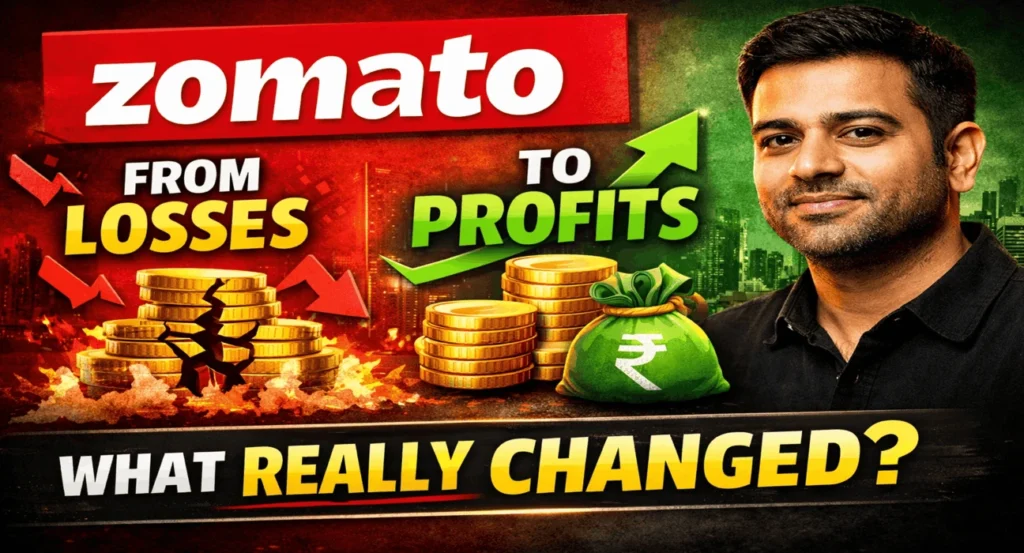


Why 2025 Is the Year of Startup Survival, Not Valuations

Why is 2025 being called the year of startup survival instead of valuations?
In 2025, capital didn’t disappear — it concentrated. Global venture funding actually rebounded sharply, but almost entirely into AI mega-rounds and a shrinking pool of “winner” companies, while deal count and investor participation fell across the board. For most founders, especially outside AI, that means longer fundraising cycles and less forgiveness for burn. The result: profitability, cash discipline, and runway now matter more to investors — and to founders themselves — than headline valuations.
The Numbers Behind the Shift
A few years ago, the playbook was simple: raise fast, spend faster, chase unicorn status, and let the valuation do the talking. That playbook hasn’t fully died, but the data shows who it still works for — and it’s a much smaller group than before.
Globally, venture funding climbed to roughly $469–512 billion in 2025, one of the strongest years since 2021. But that headline number hides a sharp concentration effect: deal count fell 17% even as total dollars rose, and mega-rounds of $100 million or more captured the majority of all capital deployed. AI companies alone pulled in close to half of global venture funding for the year. If you weren’t building in AI infrastructure or weren’t already a proven late-stage company, the money moved further away, not closer.
India tells a similar story. Indian startups raised approximately $11 billion in 2025, an 8% decline from the $12 billion raised in 2024, according to Inc42’s annual trends report. Mega deals of $100 million or more dropped 25% year-on-year — a 92% fall from 2021’s peak of 109 such rounds. Perhaps the starkest number: investor participation in Indian rounds fell 53%, from roughly 6,800 investors in 2024 to about 3,170 in 2025, per Tracxn data reported by TechCrunch. Fewer investors, writing fewer checks, to fewer companies — that’s not a slowdown, it’s a filtering.
There was a silver lining, too. Startup layoffs in India actually declined to around 3,800 employees in 2025, down from 4,700 in 2024 and dramatically lower than the 24,000 laid off in 2023. IPOs hit a record 18 for the year. Founders who survived the correction are, on the whole, running leaner and more disciplined companies.
Burn Rate Is the New Red Flag
A high burn rate used to get waved off as “aggressive growth.” In 2025’s funding environment, it’s closer to a disqualifier.
Investors evaluating a deal are now asking pointed questions before anything else:
- How long can the company survive without fresh capital?
- What’s the actual path to breakeven, not the theoretical one?
- What happens to growth if the next round takes 18 months instead of 8?
Startups that made it through 2025 tended to do a few unglamorous things well: cutting costs that didn’t map to revenue, slowing hiring, renegotiating vendor terms, and killing features that looked good in a pitch deck but didn’t move the needle. None of it is exciting. All of it is what “survival mode” actually looks like in practice, not as a metaphor.
Valuations Don’t Pay Salaries
A billion-dollar valuation doesn’t clear payroll, settle vendor invoices, or keep servers running. Cash does. That distinction, obvious in theory, got lost during the 2021 boom and is being relearned the hard way now.
Founders are shifting the core question from “what’s our next valuation mark” to “how many months of runway do we actually have.” Many early-stage founders are deliberately choosing smaller rounds with cleaner terms over inflated valuations that come loaded with unrealistic growth expectations attached. A high valuation sets a bar the next round has to clear — and in a tighter market, that bar can become the reason a company can’t raise at all.
Profitability Has Stopped Being a Taboo Topic
For years, talking about profitability at a startup felt almost embarrassing — a tacit admission you weren’t thinking big enough. That’s flipped. Startups that can point to real revenue, retained customers, and sane unit economics are earning investor trust even without hypergrowth numbers attached.
This isn’t purely a financial shift; it’s a cultural one. Founders are increasingly building businesses designed to be run and sustained, not just pitched and flipped at the next markup.
What This Means If You’re Building Right Now
The founders navigating 2025 well tend to share a few traits: 18–24 months of visible runway, customers who pay reliably and on time, cost structures they can actually explain line by line, and teams that aren’t operating in permanent crisis mode. None of that photographs well for a LinkedIn update. All of it is what keeps a company alive long enough to raise on better terms later — or not need to raise at all.
What to Watch Next
- Whether AI funding concentration eases in 2026, or whether non-AI startups continue facing a structurally harder fundraising market
- India’s early-stage funding trend — it held up better than late-stage in 2025, and whether that continues will shape which founders can even get a first check
- Startup shutdown rates, which hit a three-year high in India in 2025 even as layoffs fell — a sign the filtering isn’t over
- Whether 2026’s rebound in global mega-round activity trickles down to mid-market and early-stage deal volume, or stays concentrated at the top
The bottom line: 2025 didn’t end the startup era. It re-priced it. Businesses built on fundamentals — real revenue, sane burn, and demonstrable paths to profitability — are the ones still standing, and increasingly, the ones getting funded.
Funding figures cited above are drawn from CB Insights’ State of Venture 2025, Crunchbase, PitchBook, Inc42’s Annual Indian Startup Trends Report 2025, and Tracxn data reported by TechCrunch — current as of early 2026.


