



From Hustle to Health: Why Burnt-Out Founders Are Rewriting the Startup Playbook
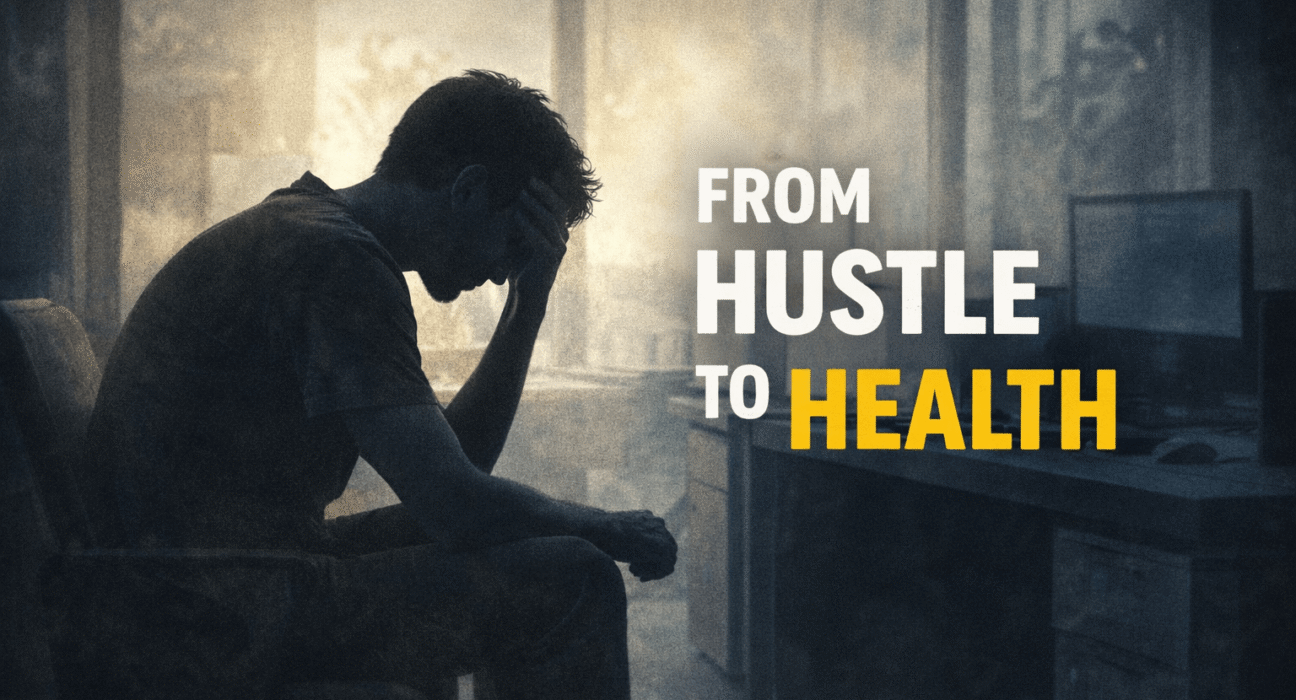
Why is startup culture shifting away from hustle culture toward founder wellbeing?
Partly because the costs of ignoring it have become too visible to dismiss. The World Health Organization formally classified burnout as an “occupational phenomenon” in its ICD-11 framework, giving the condition clinical legitimacy rather than treating it as a personal failing. In India specifically, the shift accelerated after real, reported events forced the conversation into the open — including the 2023 death of a young EY employee in Pune that sparked a national debate about overwork culture, and a 2024 incident where a startup’s viral “firing employees for admitting burnout” stunt (later revealed as guerrilla marketing) still ended in the company launching a genuine paid mental-health leave policy in response to the backlash.
What Actually Changed the Conversation in India
Startup culture doesn’t shift because of abstract sentiment — it shifts after concrete, reported events make ignoring the issue look worse than addressing it. Two moments did that work in the Indian context recently.
The July 2023 death of a young chartered accountant at EY’s Pune office, attributed by her family to overwork, became a flashpoint for a broader debate about exploitative work culture across Indian corporate and startup environments — the kind of event that made “hustle” language in job postings and founder messaging look considerably less aspirational than it had a few years earlier.
Then in December 2024, mobile spa startup YesMadam sent what appeared to be an internal email announcing it would fire employees who admitted to experiencing burnout — a message that went viral and drew intense public backlash before the company clarified it was a guerrilla marketing stunt, apologized on LinkedIn, and used the moment to launch what it described as India’s first company-wide “De-Stress Leave Policy,” offering paid leave specifically for mental health. Whatever one thinks of the marketing tactic, the fact that the backlash was severe enough to force a real policy response is itself a signal of how much the tolerance for dismissing burnout publicly had shifted.
The Clinical Framing Is Catching Up to the Cultural One
WHO’s ICD-11 classification of burnout as an occupational phenomenon — specifically resulting from chronic workplace stress that hasn’t been successfully managed — gives founders and companies a formal, non-stigmatizing vocabulary that didn’t really exist in mainstream startup conversation a few years ago. That matters for how the topic gets discussed: burnout described as a syndrome resulting from an unmanaged system, rather than as a personal shortfall, changes both how founders talk about their own experience and how they’re expected to respond to it in their teams.
What’s Changing in Practice, Not Just in Language
Beyond the widely discussed general survey data on founder stress (a Sifted survey found 54% of founders had experienced burnout in the past year, and a separate Startup Snapshot survey found 72% reported some form of mental health impact), the more concrete, checkable shift is in what companies are willing to formally offer and admit to:
- Dedicated mental-health leave policies, of the kind YesMadam ended up launching, moving from rare to more commonly discussed
- Founders discussing therapy and burnout publicly rather than only in private conversation, a shift that tracks with WHO’s framing normalizing the topic as workplace-related rather than purely personal
- Investors beginning to ask founders how they’re managing personal sustainability alongside the standard growth and burn-rate questions, according to founder-facing reporting on the shift
Why This Is Also a Business Risk Conversation, Not Just a Wellness One
The reframing that’s made this shift stick isn’t purely compassionate — it’s also practical. A founder operating in chronic burnout tends to make worse decisions, communicate less clearly, and lose strategic perspective at exactly the moments those things matter most. Treating founder and team mental health as an operational risk factor, alongside burn rate and churn, is a different argument than treating it as a nice-to-have — and it’s the argument that’s proven more durable in getting actual policy change, as the YesMadam case illustrates: public pressure, not internal conviction alone, is what turned a marketing stunt into a real leave policy.
What This Means If You’re Building Right Now
The founders navigating this shift well tend to do a few specific things: naming the actual pressure they’re under rather than performing constant confidence, building real breaks and delegation into their operating rhythm rather than treating rest as something earned only after a milestone, and — increasingly — treating founder and employee mental health support as a real budget line rather than an afterthought that gets cut first when costs tighten.
Frequently Asked Questions
1. Is burnout formally recognized as a medical or occupational condition?
Yes. The World Health Organization (WHO) classifies burnout in the ICD-11 as an occupational phenomenon caused by chronic workplace stress that has not been successfully managed. It is not classified as a standalone medical condition.
2. What happened with YesMadam’s “firing burned-out employees” controversy?
In December 2024, YesMadam faced widespread criticism after an internal-style email suggested employees reporting burnout could be dismissed. The company later clarified that the campaign was a marketing stunt and subsequently announced a company-wide paid mental health leave policy.
3. What sparked India’s broader hustle-culture debate in recent years?
The conversation intensified following the 2023 death of a young EY employee in Pune, which her family linked to excessive workload. The incident triggered nationwide discussions about workplace stress, burnout, work-life balance, and corporate culture across India’s startup and business ecosystem.
4. Are Indian startups actually offering more mental-health-specific policies now?
Yes, but adoption remains uneven. Some startups have introduced initiatives such as mental health leave, employee wellness programs, and counseling support. However, comprehensive mental health policies are still evolving and are not yet standard across the entire Indian startup ecosystem.
What to Watch Next
- Whether more Indian startups adopt formal mental-health leave policies following the pattern set by cases like YesMadam’s, rather than relying on informal flexibility
- Whether investor diligence begins formally incorporating founder wellbeing questions alongside standard financial and growth metrics
- Whether India develops more robust, India-specific founder mental health research, similar to the more established survey work done by organizations like Sifted in other startup ecosystems
- How companies balance genuine wellness commitments against the tighter cost environment that’s simultaneously pushing many startups toward leaner operations
The bottom line: the shift from hustle to health in Indian startup culture isn’t primarily a mindset trend — it’s been driven by specific, reported events that made the old dismissive posture toward burnout too costly to maintain publicly, backed by a clinical framework that gives the conversation legitimacy beyond personal anecdote.
Details cited above are drawn from Fortune’s reporting on the YesMadam controversy, WHO’s ICD-11 classification of burnout, and Sifted’s and Startup Snapshot’s 2025 founder mental health surveys.
Summary

Article Name
From Hustle to Health: How Founders Are Changing Startup Culture
DescriptionFounder burnout is reshaping startup culture in 2025. Why founders are slowing down, prioritising mental health, and redefining success.
Author
Upstartzen Editorial Team
Publisher Name
Upstartzen