




The SaaS Pricing Reset: Why Founders Are Quietly Raising Prices in 2025
Synopsis
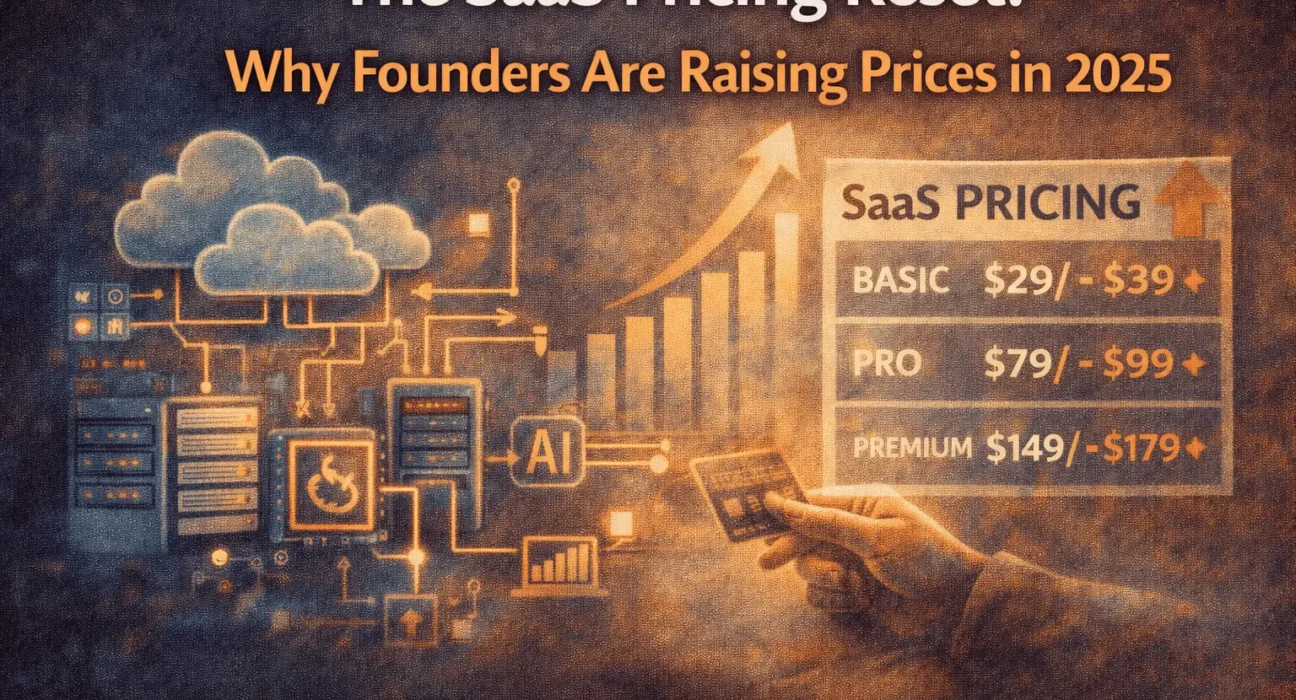
In 2025, SaaS founders are shifting conversations from growth hacks to price increases. Rising cloud infrastructure, AI compute costs, and support overhead are pushing startups toward value-based pricing models. This piece examines why the “free forever” era is fading, how companies are testing higher pricing without triggering churn, and what this transition means for founders, investors, and customers who still expect SaaS tools to remain cheap.
Let’s be honest for a second.
Nobody wakes up excited to raise prices.
Founders don’t put on their “Today I’ll charge more” hoodie and run to their laptops with a grin. Pricing is one of those things that feels like poking a sleeping bear. You know something’s going to growl. You just don’t know how loud.
And yet… here we are.
2025 is quietly becoming the year of the SaaS pricing reset. Not a flashy, headline-grabbing moment. More like a slow, deliberate shift. A founder here bumps a plan by $10. Another one there sunsets a freemium tier. Someone else introduces “AI credits” as a polite way of saying, “Hey, this stuff isn’t free to run.”
You might be wondering — why now?
The Invisible Bills Nobody Talks About
Let’s rewind a bit.
For years, SaaS pricing was almost a game of who could be cheaper, faster, and more generous. Free tiers everywhere. Unlimited seats. “Just sign up and we’ll figure out revenue later.”
And that worked. For a while.
But in 2025, the math started talking back.
Cloud costs didn’t just rise — they stacked up. Every feature, every log, every user action costs something to store, process, and secure. Then AI showed up like a shiny sports car everyone wanted to drive… until they saw the fuel bill.
According to a 2024 report by Synergy Research Group, global cloud spending crossed $330 billion annually, and it’s still climbing. Add AI model inference costs, support teams trained to handle more complex products, and suddenly that $29/month plan starts feeling… generous. Too generous.
One founder I spoke to recently (B2B SaaS, HR tech, around $3M ARR) said something that stuck with me:
“We realized our best customers were costing us the most. They used every feature, every integration, every support channel. And they were paying the same as people who barely logged in.”
That’s when the shift began.
Not to higher prices.
To fairer prices.
The Death of Freemium (Well, Kind Of)
Freemium isn’t dead. Let’s not be dramatic.
But it’s… tired.
A lot of founders are realizing that free users often bring noise instead of signal. Support tickets, feature requests, server load — all without revenue attached.
And in a world where investors are asking about burn multiple and revenue efficiency, not “How many signups did you get last month?”, free suddenly feels expensive.
So what’s replacing it?
The “Soft Paywall” Era
Instead of “Free forever,” you’ll see things like:
- Free for 14 days
- Free up to X actions
- Free, but no integrations
- Free, but AI features locked
It’s not about forcing payment. It’s about showing value early, then letting the product speak for itself.
And honestly, it works.
According to OpenView’s 2024 SaaS Benchmarks, companies that shifted from freemium to time-based trials saw up to 30% higher conversion rates to paid plans when onboarding was done right.
That’s not small.
Value-Based Pricing Is Back in the Room
Here’s the real plot twist.
Founders aren’t just charging more. They’re charging smarter.
Instead of pricing by:
- Users
- Storage
- API calls
They’re experimenting with:
- Revenue influenced
- Deals closed
- Hours saved
- Outcomes delivered
One customer success SaaS in Europe restructured their pricing around “retention uplift.” If the platform helped you reduce churn by 1%, you paid more. If not, you didn’t.
Scary? A little.
Powerful? Absolutely.
It flips the relationship from “You’re paying for software” to “You’re paying for results.”
And investors love this stuff. Predictable, defensible revenue tied to real business impact? That’s boardroom candy.
The Quiet Testing Playbook (No Churn Storms, Please)
Now here’s the part everyone’s curious about.
How do you raise prices without watching your customers run for the exits?
To be honest, there’s no magic trick. But there is a pattern.
1. New Customers First
Most startups test price increases only on new signups. Existing customers stay on legacy plans. This creates a clean A/B test without blowing up relationships.
2. Add, Then Adjust
Instead of raising the price, they add something. AI assistant. Advanced analytics. Priority support. Then they price that.
Psychologically, it feels like an upgrade, not a tax.
3. Segment the Power Users
Heavy users often get custom plans. They’re already seeing value, and they usually understand the economics better than casual users.
4. Communicate Like a Human
Not a corporate memo. Not a legal notice.
One SaaS founder sent an email that literally started with:
“This one’s awkward, but we want to be upfront with you…”
Churn? Less than 2%.
Sometimes honesty beats optimization.
Why Investors Are Quietly Pushing This Too
You don’t always hear this part in public.
But behind closed doors, VCs are asking different questions now.
Not:
“How fast can you grow?”
More like:
“How efficiently can you grow?”
Metrics like LTV/CAC, Gross Margin, and Net Revenue Retention are getting more airtime than vanity MRR charts.
Higher pricing — when done right — improves all of them.
And in a funding environment where capital isn’t flowing like it used to, being able to say, “We grew 25% last year without increasing burn” is a power move.
The Emotional Side Nobody Mentions
Let’s get real for a second.
Raising prices feels personal.
Founders worry:
- “Will people think we’re greedy?”
- “What if our community turns on us?”
- “What if Twitter drags us for this?”
But here’s the thing. Businesses that survive don’t survive because they’re cheap. They survive because they’re valuable.
And there’s a difference.
One founder told me, half-joking:
“I realized we were running a charity with a Stripe account.”
That realization usually comes right before the pricing page gets a redesign.
Why Are SaaS Companies Raising Prices in 2025?
SaaS companies are raising prices in 2025 due to rising cloud infrastructure costs, growing AI model usage expenses, higher customer support overhead, and investor pressure to improve revenue efficiency metrics such as LTV/CAC and gross margins. Many startups are shifting away from freemium models toward value-based pricing, charging customers based on business outcomes instead of usage alone.
Why Are SaaS Companies Raising Prices in 2025?
SaaS companies are raising prices in 2025 due to rising cloud infrastructure costs, growing AI model usage expenses, higher customer support overhead, and investor pressure to improve revenue efficiency metrics such as LTV/CAC and gross margins. Many startups are shifting away from freemium models toward value-based pricing, charging customers based on business outcomes instead of usage alone.
The Bigger Picture
This isn’t just about money.
It’s about maturity.
The SaaS industry is growing up. Moving from “growth at all costs” to “growth that actually makes sense.”
And maybe, just maybe, that’s a good thing.
Customers get better products. Founders build sustainable businesses. Investors get real returns instead of pretty dashboards.
It’s not glamorous. It’s not viral.
But it works.
A Quiet Question for You
If your product disappeared tomorrow… would anyone be willing to pay more to get it back?
That’s the real pricing test.
Summary

Article Name
The SaaS Pricing Reset: Why Founders Are Raising Prices in 2025
DescriptionRising cloud and AI costs are forcing SaaS founders to rethink freemium and embrace value-based pricing. Here’s how startups are raising prices without churn.
Author
Upstartzen Editorial Team
Publisher Name
Upstartzen
Publisher Logo