





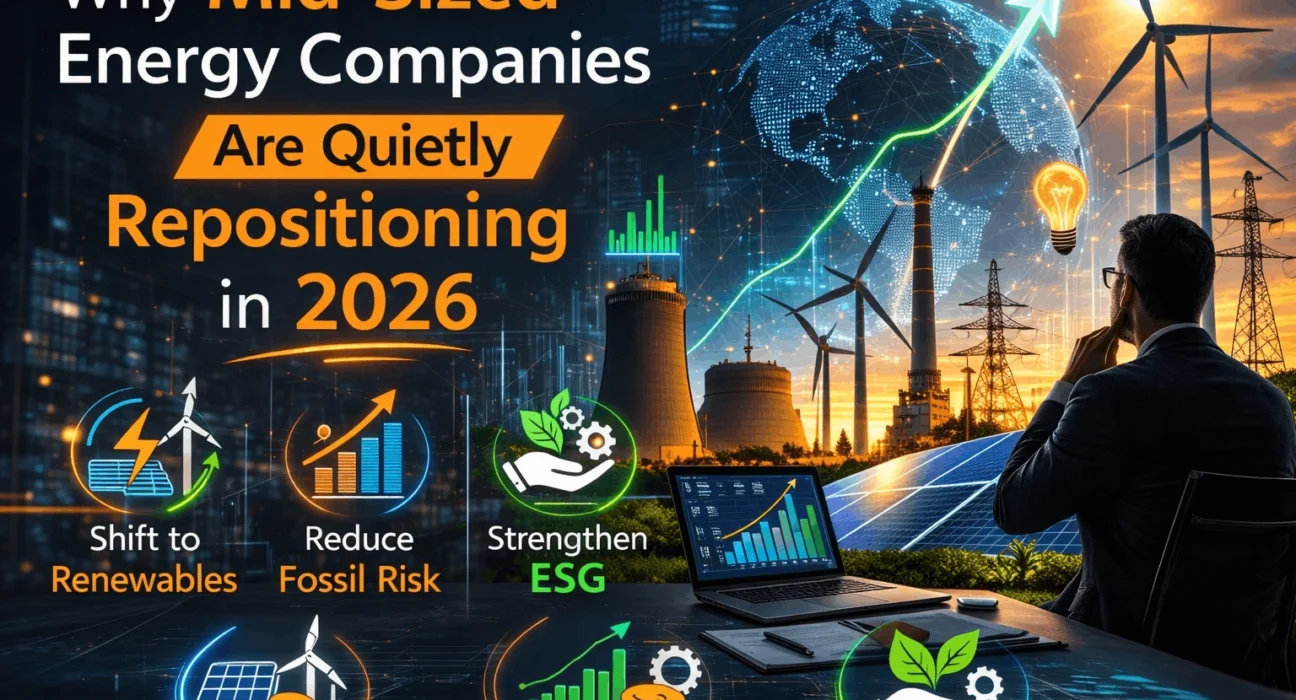
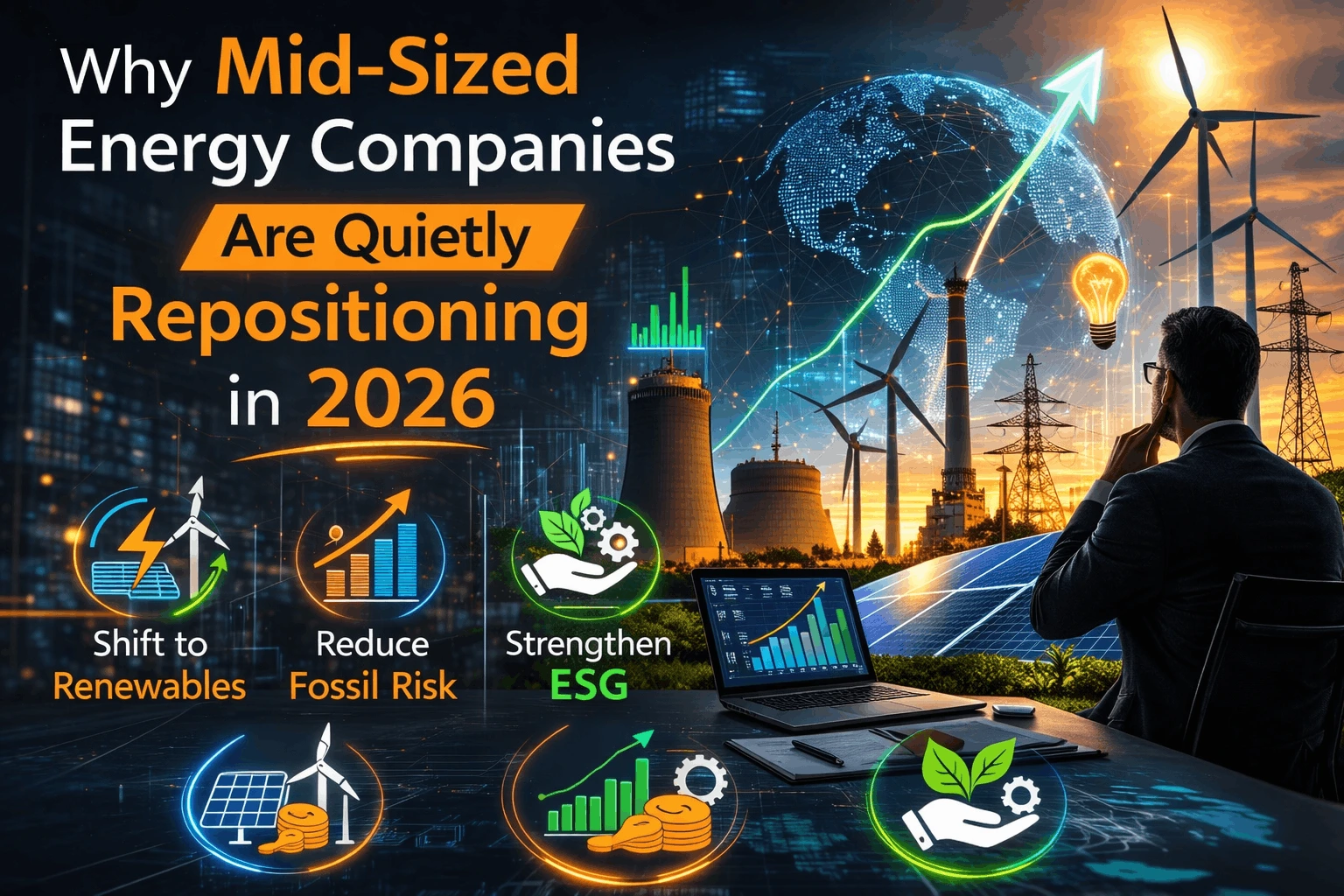
Why Mid-Sized Energy Companies Are Quietly Repositioning in 2026
Synopsis
Something interesting is happening in the global energy market — and it’s not loud.
There are no flashy IPO announcements. No dramatic bankruptcies dominating headlines. No billion-dollar mega-mergers stealing attention.
Instead, mid-sized energy companies — the ones that rarely trend on financial news — are quietly repositioning themselves in 2026.
They’re restructuring assets. Shifting portfolios. Investing in grid modernization. Partnering in renewables. Cutting exposure to volatile segments. And doing it carefully, almost quietly.
Why?
Because the energy transition isn’t theoretical anymore. It’s operational. And mid-sized players, especially in the US, Europe, and parts of Asia, are realizing that staying “in-between” is the riskiest place to be.
This isn’t panic. It’s strategic recalibration.
Let’s unpack what’s actually going on.
The Middle-Market Squeeze
If you look at the global landscape, the extremes are comfortable.
Large energy giants have capital depth. They can invest billions into offshore wind, hydrogen infrastructure, carbon capture — and absorb setbacks.
Small energy startups? They’re nimble. Focused. Often backed by private equity or climate-focused funds.
But mid-sized energy companies?
They’re stuck in the middle. Not small enough to pivot instantly. Not large enough to dominate massive renewable projects.
And that’s the squeeze.
Why Are Mid-Sized Energy Companies Repositioning in 2026?
Mid-sized energy companies are repositioning in 2026 to reduce exposure to fossil fuel volatility, adapt to energy transition policies, strengthen balance sheets, and capture growth in renewable energy, grid modernization, and decarbonization markets.
The Policy Pressure Is Real
You might be wondering — is this just market evolution? Or regulatory pressure?
It’s both.
In the United States, federal incentives tied to clean energy under the Inflation Reduction Act continue reshaping capital allocation strategies.
In the European Union, stricter emissions targets and ESG compliance frameworks are accelerating portfolio reviews.
In India and Southeast Asia, renewable adoption targets are rising faster than legacy infrastructure upgrades.
Mid-sized firms can’t ignore that.
They’re adjusting before they’re forced to.
Portfolio Rebalancing: The Quiet Divestment Wave
To be honest, one of the most noticeable trends in 2026 is quiet asset divestment.
Mid-sized oil and gas firms are selling:
- Aging upstream assets
- High-maintenance infrastructure
- Marginally profitable operations
And reallocating capital into:
- Utility-scale solar
- Battery storage
- Grid optimization
- Hybrid energy systems
This isn’t ideological. It’s financial.
Volatility in fossil fuel pricing has become harder to hedge long-term. Investors prefer predictable returns. Renewable energy projects, despite lower margins, often offer stability through long-term contracts.
And stability matters now more than ever.
The Investor Factor
Let’s not underestimate capital markets.
Private equity and institutional investors are demanding clearer transition roadmaps. ESG disclosures are no longer optional marketing documents — they influence credit access and valuation multiples.
Mid-sized companies without credible decarbonization strategies are facing:
- Higher financing costs
- Reduced investor appetite
- Increased activist pressure
That’s not speculation. It’s showing up in quarterly calls.
🌍 GEO Perspective: Regional Differences
United States
Mid-sized firms are leveraging tax credits and federal clean energy incentives to accelerate renewable diversification.
Europe
Stricter climate regulations are pushing faster operational shifts, especially in Germany, France, and the Nordics.
Asia-Pacific
Energy demand growth remains high, but renewable integration is increasing, especially in India and Australia.
Different speeds. Same direction.
Technology Is Lowering the Barrier
And here’s something people underestimate: technology costs have dropped.
Battery storage costs have declined significantly over the past decade. Smart grid technology is more accessible. AI-based energy management systems allow mid-sized operators to optimize output without massive overhead.
In other words, repositioning is financially feasible now.
Five years ago? It might have been too expensive.
How Are Mid-Sized Energy Companies Repositioning?
Mid-sized energy companies are repositioning by divesting high-risk fossil fuel assets, investing in renewable energy projects, modernizing grid infrastructure, improving energy storage capabilities, and strengthening ESG compliance frameworks.
Corporate Turnaround or Strategic Evolution?
Here’s where it gets nuanced.
This isn’t always a turnaround story in the traditional sense.
Many of these companies aren’t distressed. They’re profitable.
But they see the writing on the wall.
Energy demand patterns are shifting. Electrification is expanding. Corporate buyers are demanding clean energy procurement options.
If you don’t reposition early, you risk losing relevance.
And relevance in energy markets is everything.
The Risk Nobody Talks About
But let’s be honest. This transition carries risk.
- Renewable margins can be thinner.
- Project timelines are longer.
- Regulatory approvals can delay returns.
- Infrastructure integration is complex.
And internal resistance exists too. Legacy teams don’t always embrace transformation easily.
Corporate repositioning sounds clean on paper. Execution is messy.
Always.
AEO & AIO Optimization Insight
Search engines — especially AI-driven search platforms — are prioritizing:
- Clear definitions
- Direct answers
- Structured sections
- Authoritative tone
Which means articles explaining “why energy companies are repositioning” in concise blocks are more likely to surface in AI-generated summaries.
Structured insight isn’t just helpful for readers. It’s discoverability strategy.
What This Means for the Broader Market
So what’s the bigger picture?
Mid-sized energy companies collectively represent significant production capacity. If they shift, supply chains shift. Capital flows shift. Employment trends shift.
This isn’t just about individual corporate strategy.
It’s about energy market evolution at scale.
And it’s happening quietly.
Final Thoughts
Repositioning in 2026 isn’t dramatic. It’s disciplined.
Mid-sized energy companies aren’t chasing headlines. They’re adjusting exposure, strengthening balance sheets, and cautiously entering renewable and low-carbon segments.
Not because it’s trendy.
But because staying static is riskier.
Corporate turnarounds used to mean crisis management.
Now? Sometimes it simply means adapting early.
And maybe that’s the smartest move of all.
Summary
Article Name
Why Mid-Sized Energy Companies Are Repositioning in 2026 | Corporate Turnaround Trends
DescriptionMid-sized energy companies are repositioning in 2026 to reduce fossil volatility, meet ESG demands, and invest in renewables. Here’s what’s driving the shift.
Author
Upstartzen Editorial Team
Publisher Name
Upstartzen
Publisher Logo