

Is the Commodity Cycle Turning Again? What Founders Should Watch
Synopsis
Commodity cycles don’t just affect mining giants or oil traders in skyscrapers. They ripple outward — quietly at first — and then suddenly, they’re everywhere. Raw material costs spike. Shipping rates swing. Funding sentiment shifts. And founders who weren’t watching closely start asking uncomfortable questions.
So… is the commodity cycle turning again in 2026?
Short answer? It might be. But the real story isn’t about whether prices go up or down. It’s about how early-stage founders, operators, and startup investors should interpret what’s happening across oil, metals, agricultural commodities, and energy markets — and how those signals could influence growth strategy, fundraising, and expansion plans.
This deep dive breaks down:
- What a commodity cycle actually means (without the textbook jargon)
- Why 2026 feels different from previous cycles
- Early indicators founders should monitor
- Sector-specific impact (energy, manufacturing, climate tech, logistics, SaaS)
- Strategic moves smart startups are already making
If you’re building in hardware, clean energy, EV infrastructure, agritech, or even B2B SaaS that depends on industrial clients — this matters more than you think.
Is the Commodity Cycle Turning Again in 2026?
The commodity cycle in 2026 shows early signs of rotation due to tightening supply, geopolitical risks, energy transition investments, and renewed infrastructure spending.
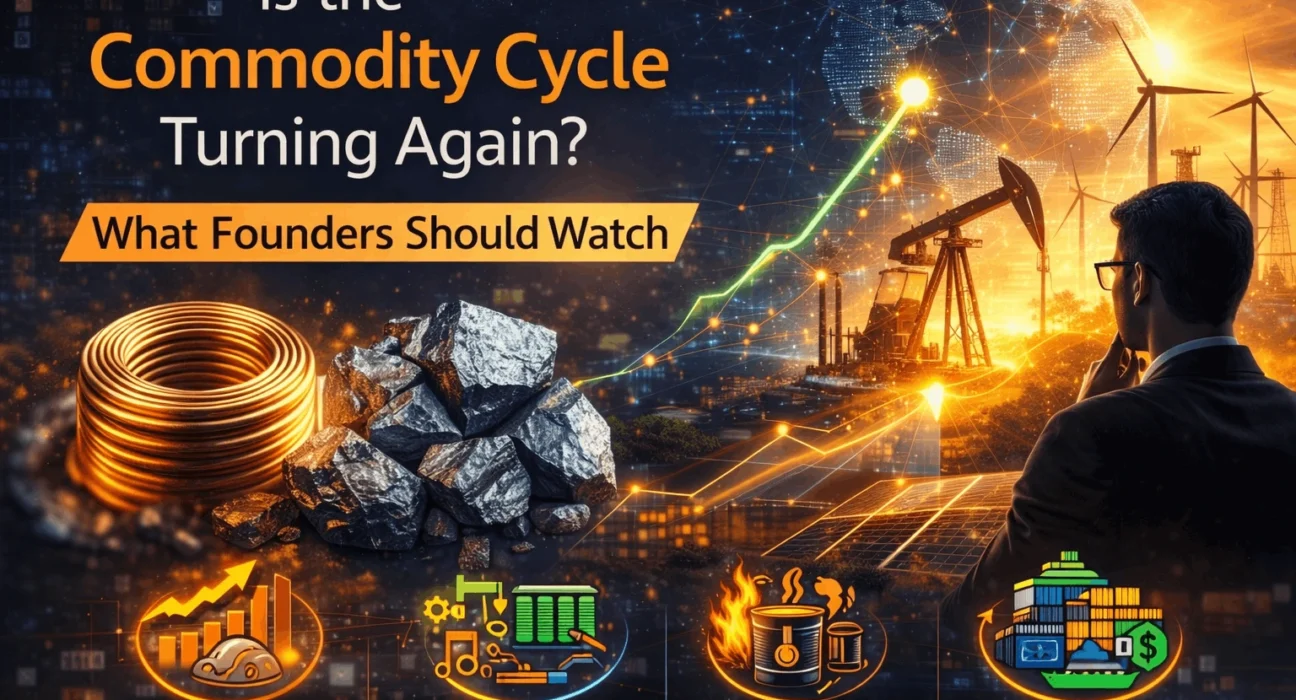
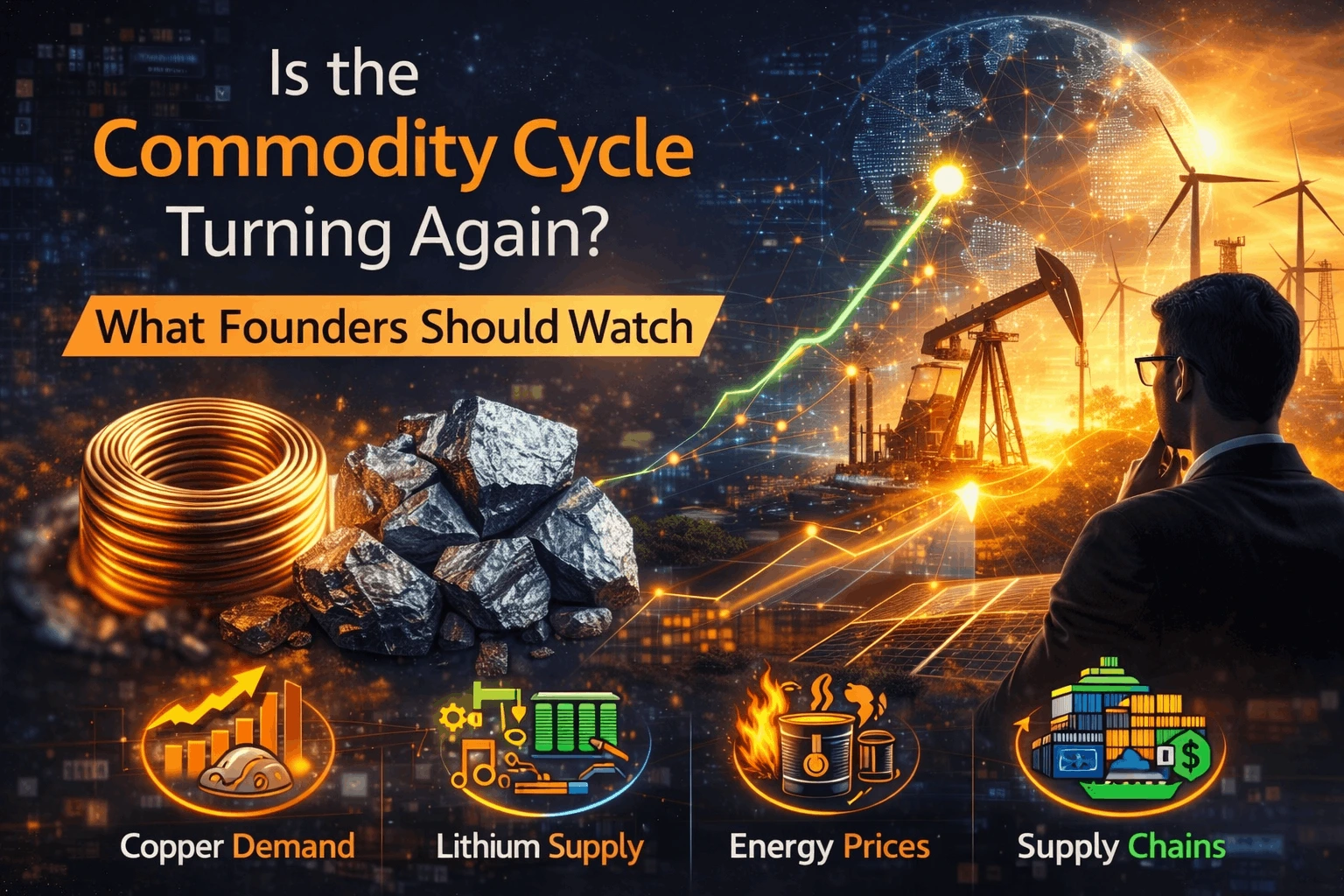
Founders should watch input cost volatility, energy prices, metal demand — especially copper and lithium — and shifts in capital flows. These factors can directly affect startup margins, fundraising sentiment, and sector growth dynamics.
First, What Is a Commodity Cycle? (Without Making It Boring)
Let’s not overcomplicate this.
A commodity cycle is basically the rise and fall of raw material prices — oil, natural gas, copper, lithium, iron ore, wheat — driven by supply-demand imbalances, macroeconomics, geopolitics, and sometimes, plain old human over-optimism.
When prices rise sharply → producers expand capacity.
When capacity overshoots → prices fall.
Then investment slows.
Supply tightens again.
And the cycle restarts.
It’s like a pendulum. Or honestly, like startup funding cycles — remember 2021?
And here’s the thing founders sometimes miss: commodity cycles don’t just affect miners or oil majors like ExxonMobil or Rio Tinto. They impact:
- Manufacturing startups
- EV supply chains
- Solar hardware firms
- Infrastructure tech
- Food startups
- Logistics platforms
- Even enterprise SaaS selling into industrial clients
So yeah. It’s bigger than it sounds.
Why 2026 Feels… Different
To be honest, this doesn’t feel like a simple rebound story.
There are four structural shifts happening simultaneously:
1. Energy Transition Isn’t Optional Anymore
Governments aren’t just “encouraging” renewables. They’re subsidizing, regulating, and in some cases mandating them.
Policies like the U.S. Inflation Reduction Act (official details: https://www.whitehouse.gov/cleanenergy/inflation-reduction-act-guidebook/) and the European Green Deal are injecting long-term capital into energy infrastructure.
That means massive demand for:
- Copper
- Lithium
- Nickel
- Rare earths
- Grid materials
Which leads to the obvious question: Can supply keep up?
2. Underinvestment in Fossil Fuels
After years of ESG pressure, oil & gas capex slowed. Companies like BP and Shell rebalanced portfolios toward renewables and shareholder returns.
But global demand didn’t collapse.
So we’re now in a situation where:
- Traditional energy supply growth is slower
- Emerging market demand is still strong
- Renewables aren’t fully replacing fossil fuels yet
That tension? It creates price volatility.
And volatility is what founders hate.
3. Geopolitics Is Back (In a Big Way)
Supply chains are no longer optimized purely for cost.
They’re optimized for resilience.
Reshoring. Friend-shoring. Strategic mineral alliances. Governments labeling lithium as “critical infrastructure.”
That changes the economics of commodity production. And yes, it pushes prices upward over time.
4. Infrastructure Supercycle Narratives
In many economies, infrastructure spending is ramping up again — ports, grids, EV charging, semiconductors.
Companies like BHP and Glencore are openly signaling long-term structural demand for industrial metals.
That doesn’t look like a short-term spike. It looks… structural.
What Founders Should Actually Watch
Okay. Enough macro talk.
Here’s what matters if you’re building something right now.
1. Copper Prices
Copper is often called “Dr. Copper” because it diagnoses global economic health.
If copper rises sustainably, it usually signals industrial expansion. That’s bullish for:
- Hardware startups
- EV ecosystem builders
- Renewable energy platforms
If it spikes too fast? Margins get squeezed.
2. Energy Price Stability
Even if you’re SaaS.
Why? Because your enterprise customers care. High energy prices tighten budgets across industrial clients. And enterprise sales cycles stretch.
Watch oil benchmarks tied to companies like Saudi Aramco. Not daily. But trend-wise.
3. Lithium & Battery Metals
EV and storage startups live or die by battery economics.
If lithium supply tightens, battery costs rise. If costs rise, EV adoption models shift. That flows into venture funding narratives.
And suddenly your climate tech pitch deck needs revised projections.
4. Freight & Shipping Costs
Remember 2021 shipping chaos? Yeah.
If commodity demand surges again, shipping tightens. Founders with hardware supply chains feel it first.
Sector-by-Sector Impact
Energy & Climate Tech Startups
If the commodity cycle is indeed turning upward:
- Renewable infrastructure funding increases
- Grid modernization accelerates
- Energy storage demand rises
But margins may compress in hardware-heavy models.
Climate SaaS? Potentially insulated. But dependent on customer capital budgets.
Manufacturing & Hardware Founders
This is the sensitive zone.
Rising input costs = margin pressure.
Long lead times = operational complexity.
Hedging becomes strategic, not optional.
You might be wondering — should startups even think about hedging?
In some cases, yes. Especially for larger Series B+ companies with predictable raw material exposure.
Agritech & Food Startups
Commodity volatility in grains, fertilizer, and fuel can completely shift cost structures.
Agtech software platforms might see increased demand as farms look to optimize margins.
But input-heavy startups? Tougher road.
SaaS Founders (Yes, You Too)
Industrial SaaS firms serving mining, oil, manufacturing clients benefit in upcycles.
When commodity prices rise, clients spend more on:
- Optimization software
- Efficiency tools
- Predictive analytics
So sometimes, a commodity upcycle is indirectly bullish for B2B SaaS.
Counterintuitive, right?
Is This a Short-Term Bounce or a Multi-Year Shift?
That’s the million-dollar question.
Historically, cycles last years. But this time we have:
- Energy transition
- Supply constraints
- ESG capital reallocation
- Government-backed industrial policy
Which suggests structural demand rather than speculative froth.
But here’s the uncomfortable truth: cycles don’t move in straight lines.
There will be pullbacks. There always are.
Strategic Moves Smart Founders Are Making
I’ve seen a few patterns emerging among sharper operators:
- Diversifying suppliers early
- Locking long-term contracts
- Revising pricing models to include volatility buffers
- Building “commodity risk” into financial modeling
- Monitoring policy dashboards, not just price charts
And more interestingly — some founders are leaning into the cycle.
For example:
- Building marketplaces for critical minerals
- Creating analytics tools for resource procurement
- Financing infrastructure via climate-linked instruments
They’re not afraid of volatility. They’re monetizing it.
GEO, AEO & AIO Optimization Notes
AEO (Answer Engine Optimization):
- Clear Q&A sections (see Featured Snippet above)
- Direct, concise answers in subheadings
- Structured data via FAQ schema (recommended implementation)
GEO (Generative Engine Optimization):
- Context-rich explanations of macro drivers
- Cross-sector relevance
- Balanced perspective with real-world examples
AIO (AI Optimization):
- Natural language tone
- Structured headers
- Clear signal phrases like “What founders should watch”
- Explicit causal relationships
Final Thoughts
So… is the commodity cycle turning again?
Probably. But more importantly, it’s evolving.
This isn’t just oil spiking or metals rallying. It’s a structural reshaping of global supply chains, energy systems, and capital flows.
And founders who treat commodities as “someone else’s problem” might get surprised.
You don’t need to become a macro trader. But you do need awareness.
Because when raw material prices shift, capital allocation shifts. And when capital shifts — startup ecosystems follow.
The smart move? Watch quietly. Model conservatively. And build flexibility into your strategy.
Cycles turn.
Prepared founders pivot.
Unprepared ones react.
And in startups, reaction is expensive.
Summary
Article Name
Is the Commodity Cycle Turning Again in 2026? What Startup Founders Should Watch
DescriptionIs the global commodity cycle turning again in 2026? Discover the key signals founders should watch—from copper and lithium prices to energy markets and supply chains.
Author
Upstartzen Editorial Team
Publisher Name
Upstartzen
Publisher Logo