



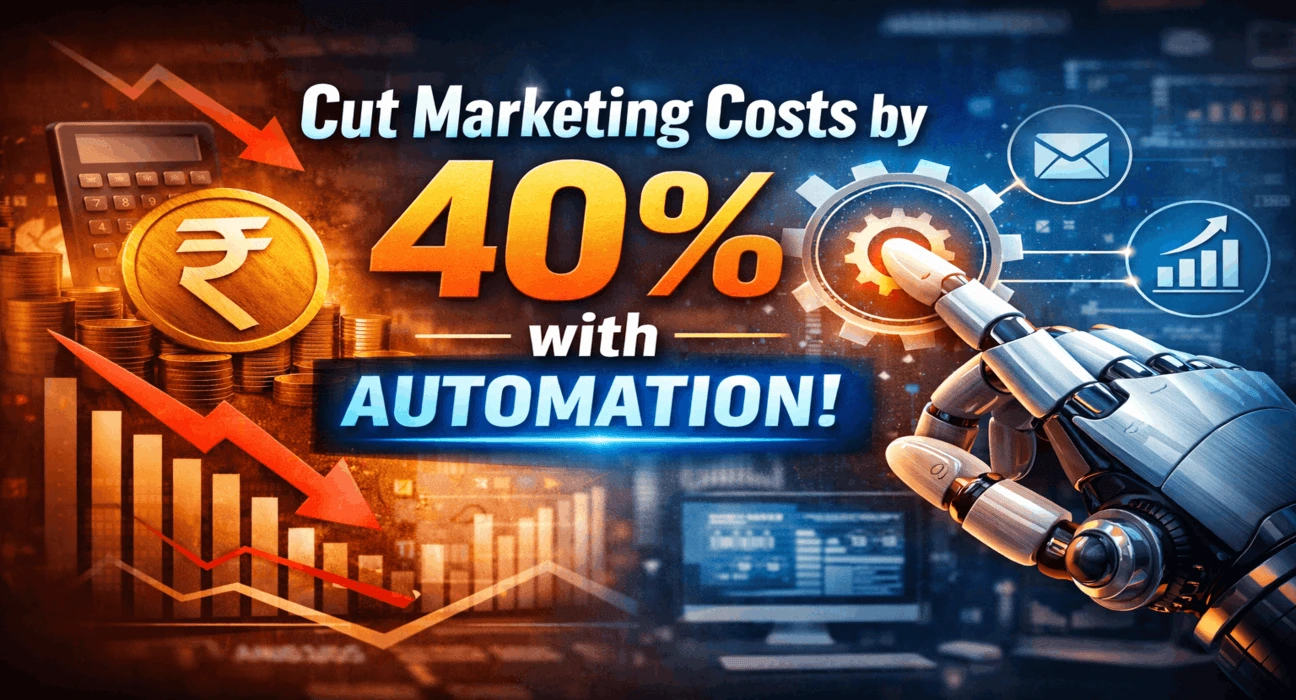
How Automation Can Reduce Your Marketing Costs by 40%
Most businesses think cutting marketing costs means cutting performance.
It doesn’t.
Here’s the uncomfortable truth…
You’re not overspending on marketing.
You’re overspending on manual work.
Repetitive tasks. Inefficient workflows. Human bottlenecks.
And that’s exactly where automation changes the game.
Companies that adopt smart automation strategies are not just saving money—they’re scaling faster with leaner teams.
Let’s break down how.
📊 Context: Why This Matters More Than Ever
Marketing has become:
- More data-driven
- More channel-heavy
- More time-consuming
In 2015, a small team could handle marketing manually.
In 2026?
You’re dealing with:
- Content across 5+ platforms
- Email sequences
- CRM pipelines
- Analytics dashboards
- Personalization demands
Manual execution simply doesn’t scale.
👉 That’s why marketing automation is no longer optional—it’s a cost-control system.
Why Marketing Automation Matters in 2026
Marketing automation is essential in 2026 because modern marketing is more data-driven, multi-channel, and time-intensive—making manual execution inefficient and unscalable.
What Has Changed?
- Marketing is more data-driven
- Multiple channels need constant management
- Execution is more time-consuming
Modern Marketing Complexity
- Content across 5+ platforms
- Email marketing sequences
- CRM pipelines and lead tracking
- Analytics dashboards
- Personalized user experiences
In simple terms:
👉 Marketing automation is no longer optional—it’s a system to control costs, save time, and scale efficiently.
Core Breakdown: How Automation Cuts Marketing Costs
1. Eliminates Repetitive Tasks (Biggest Hidden Cost)
Let’s be honest…
Your team spends hours on tasks that don’t create real value.
Examples:
- Scheduling posts
- Sending follow-up emails
- Updating CRM data
- Reporting metrics
💡 What Automation Does:
Tools like:
- HubSpot
- Zapier
- Mailchimp
…can handle these automatically.
📉 Cost Impact:
- Saves 15–20 hours/week per employee
- Reduces need for additional hires
👉 That alone can cut operational costs by 20–25%
2. Reduces Human Error (And Costly Mistakes)
Mistakes in marketing are expensive:
- Wrong email campaigns
- Missed leads
- Incorrect targeting
Manual processes increase these risks.
💡 Automation Advantage:
- Pre-defined workflows
- Trigger-based actions
- Data accuracy
📊 Example:
A missed follow-up can cost a deal.
Automation ensures:
👉 Every lead gets contacted
👉 Every step is tracked
3. Improves Lead Conversion Efficiency
Here’s the thing…
Most businesses don’t have a lead problem.
They have a lead management problem.
🔁 Without Automation:
- Leads get ignored
- Follow-ups are inconsistent
⚙️ With Automation:
- Lead scoring
- Automated nurturing sequences
- Behavior-based emails
📈 Result:
- Higher conversion rates
- Lower cost per acquisition (CPA)
👉 Saving up to 30–40% on customer acquisition costs
4. Enables Lean Teams to Do More
Automation doesn’t replace teams.
It upgrades them.
📊 Example Scenario:
Without automation:
- 5 marketers needed
With automation:
- 2–3 marketers + tools
💡 Why This Works:
- Tools handle execution
- Humans focus on strategy
👉 That’s where real ROI comes from.
5. Optimizes Ad Spend with Data Automation
Running ads manually?
That’s risky and expensive.
⚙️ Automation Tools:
- Google Ads Smart Bidding
- Meta AI targeting
- Analytics tools
💡 What Happens:
- Real-time optimization
- Better targeting
- Reduced wasted spend
👉 Businesses often reduce ad waste by 15–30%
6. Content Production at Scale (Without Hiring More Writers)
Content is expensive.
Blogs, emails, ads, social posts…
Now multiply that by consistency.
🤖 Automation Tools:
- AI writing tools
- Content schedulers
- Repurposing platforms
📊 Impact:
- 3x faster content production
- Lower outsourcing costs
👉 Content cost reduction: 20–50%
7. Better Customer Retention (Cheaper Than Acquisition)
Let’s be honest…
Retention is cheaper than acquisition.
💡 Automation Helps With:
- Email drip campaigns
- Re-engagement flows
- Personalized offers
📈 Result:
- Higher lifetime value (LTV)
- Lower churn
👉 This indirectly reduces marketing costs significantly.
📊 Real-World Cost Breakdown (Logical Estimate)
Let’s take a mid-sized business:
Before Automation:
- Team cost: ₹5,00,000/month
- Ad spend inefficiency: ₹1,50,000
- Missed leads: ₹1,00,000 loss
After Automation:
- Team cost reduced: ₹3,50,000
- Ad efficiency improved
- Lead conversion increased
👉 Total savings: ~30–40%
⚠️ Contrarian Insight (Important)
Here’s something most people won’t tell you:
Automation doesn’t reduce costs immediately.
In fact, in the short term:
- Tool subscriptions increase
- Setup time is required
But…
👉 Long-term efficiency compounds.
Marketing Automation Framework (Step-by-Step)
To effectively implement marketing automation, businesses should audit tasks, identify opportunities, choose the right tools, build simple workflows, and measure ROI.
-
Audit Your Marketing Tasks
- Identify repetitive tasks
- Highlight time-consuming workflows
-
Identify Automation Opportunities
- Email marketing
- Lead management
- Reporting and analytics
-
Choose the Right Tools
- CRM (HubSpot)
- Automation (Zapier)
- Email marketing (Mailchimp)
-
Build Simple Workflows First
- Welcome email sequences
- Lead follow-ups
- Social media scheduling
-
Measure ROI
- Time saved
- Cost reduction
- Conversion improvements
In simple terms:
👉 Audit → Automate → Optimize → Scale.
🎯 Quick Wins You Can Implement Today
- Automate email sequences
- Schedule content weekly
- Use AI for content drafts
- Set up lead scoring
🧠 Key Takeaways (Bullet Summary)
- Automation reduces manual workload
- Improves efficiency across channels
- Lowers cost per acquisition
- Enables smaller teams to scale
- Increases ROI over time
💰 Recommended Tools (Monetization Friendly)
- HubSpot – CRM + automation
- Zapier – workflow automation
- Mailchimp – email marketing
- ActiveCampaign – advanced automation
- Google Analytics – data tracking
👉 These tools can be monetized via affiliate programs.
🔚 Conclusion
Marketing isn’t getting simpler.
It’s getting more complex, more competitive, and more expensive.
But here’s the opportunity…
Automation flips the equation.
Instead of:
👉 More effort = more results
You get:
👉 Smarter systems = better results
And that’s how businesses are quietly cutting costs by 40% while scaling faster.
The question is…
Are you still doing things manually?
Frequently Asked Questions (Marketing Automation)
1. What is marketing automation?
Marketing automation is the use of software to automate repetitive marketing tasks such as email campaigns, lead nurturing, and campaign management.
2. How much cost can automation save in marketing?
Businesses can reduce marketing costs by 20–40%, depending on the level of automation implemented.
3. Which tools are best for marketing automation?
Popular tools include HubSpot, Zapier, Mailchimp, and ActiveCampaign.
4. Is marketing automation suitable for small businesses?
Yes, marketing automation is highly beneficial for small businesses as it helps them scale efficiently without needing large teams.
5. Does automation replace marketers?
No, automation enhances productivity by handling repetitive tasks, allowing marketers to focus on strategy, creativity, and growth.
Summary
Article Name
How Automation Can Reduce Your Marketing Costs by 40%
DescriptionLearn how marketing automation can reduce costs by up to 40%, improve efficiency, and boost ROI with proven strategies and tools.
Author
Upstartzen Editorial Team
Publisher Name
Upstartzen
Publisher Logo