



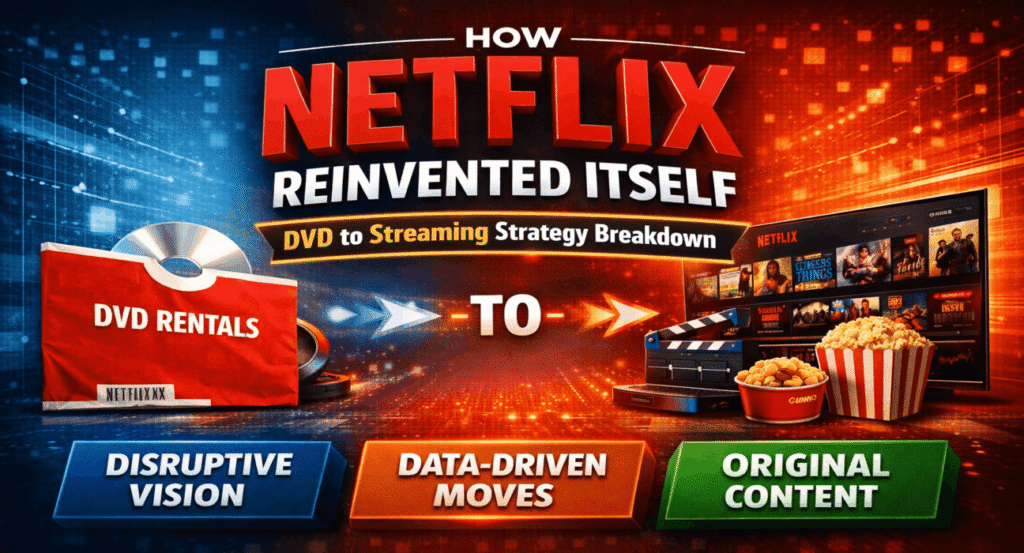
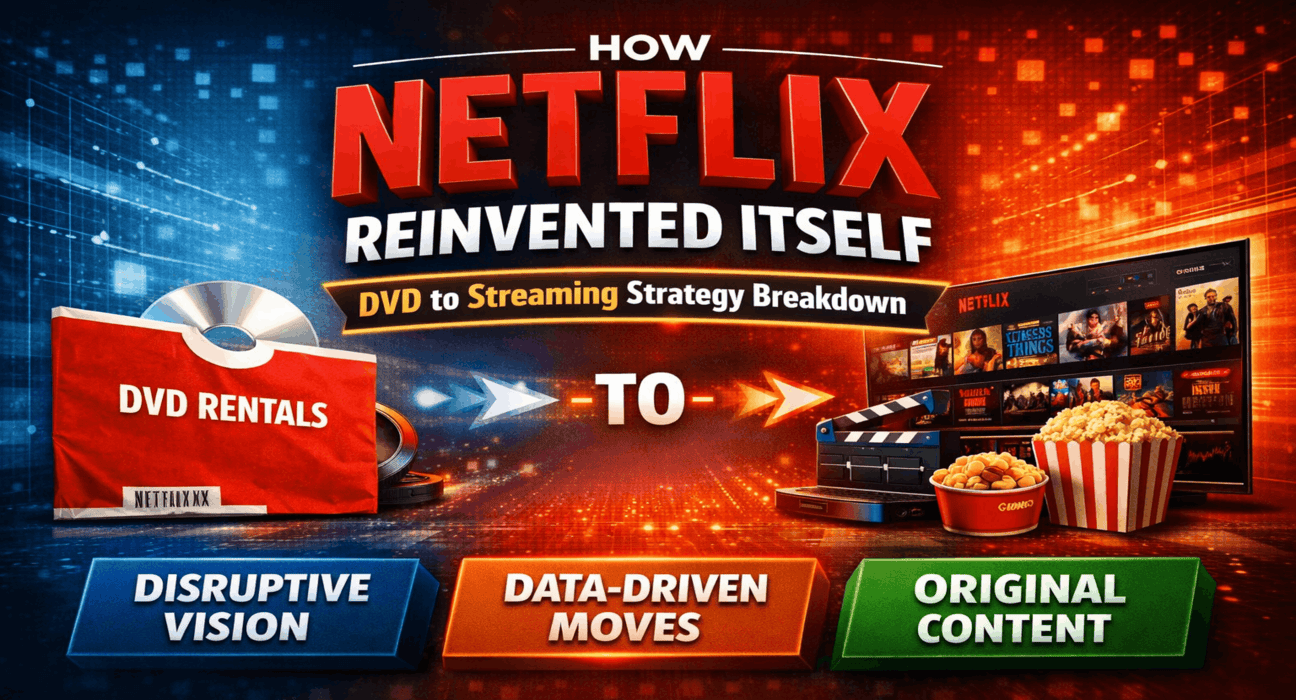
How Netflix Reinvented Itself: From DVD Rentals to Streaming Dominance
The Company That Killed Its Own Business
In the early 2000s, Netflix was winning.
DVD rentals by mail. Millions of subscribers. Strong growth.
Then something strange happened…
👉 Netflix started building a product that could destroy its own business.
Streaming.
Let’s be honest—most companies would protect what’s working.
Netflix did the opposite.
And that decision changed entertainment forever.
The Company That Killed Its Own Business
In the early 2000s, Netflix was winning.
DVD rentals by mail. Millions of subscribers. Strong growth.
Then something strange happened…
👉 Netflix started building a product that could destroy its own business.
Streaming.
Let’s be honest—most companies would protect what’s working.
Netflix did the opposite.
And that decision changed entertainment forever.
What Is Netflix’s Business Transformation?
Netflix’s business transformation refers to its shift from a DVD rental service to a global streaming platform, driven by early technology adoption, data-driven decisions, and content ownership.
Key Phases of Transformation
- DVD Rental Model – Subscription-based physical delivery of DVDs
- Streaming Shift – Transition to on-demand digital content
- Original Content Strategy – Investment in owned shows and movies
Core Drivers
- Technology Adoption – Leveraging internet infrastructure early
- Data-Driven Decisions – Using user data to guide content and UX
- Content Ownership – Reducing reliance on third-party licensing
The 5 Strategic Moves That Changed Netflix
1. They Anticipated the Shift Before It Happened
Here’s the thing…
Streaming didn’t suddenly appear.
It was inevitable.
Netflix saw it early.
What They Noticed:
- Internet speeds improving
- Digital consumption rising
- Physical media declining
Strategic Insight:
👉 They didn’t wait for disruption.
They prepared for it.
Contrarian Insight:
Most companies wait for proof.
Netflix acted on signals.
That’s a massive difference.
2. They Built Streaming While DVDs Were Still Profitable
This is where most companies hesitate.
Netflix didn’t.
Instead of maximizing short-term profit, they invested in streaming early.
Why Did Netflix Move to Streaming?
Netflix moved to streaming to adapt to changing consumer behavior, reduce logistics costs, and build a scalable, digital-first distribution model.
Key Decision
- Invest heavily in streaming infrastructure – Build future-ready technology
- Accept short-term losses – Prioritize long-term growth over immediate profit
- Build long-term dominance – Capture market leadership early
Strategic Concept:
👉 This approach is known as strategic cannibalization — disrupting your own business model before competitors do.
In simple terms:
👉 Sacrifice today → Win tomorrow.
3. They Used Data as a Competitive Advantage
Netflix wasn’t guessing.
They were measuring everything.
What They Tracked:
- Viewing behavior
- Completion rates
- Genre preferences
- User engagement
Example:
Netflix knew:
- When users stopped watching
- What thumbnails worked best
- Which content increased retention
👉 This allowed precision decision-making.
Tools & Platforms (You Can Use Too):
- Google Analytics → User behavior tracking
- Mixpanel → Event-based insights
- Tableau → Data visualization
👉 Data isn’t just insight.
It’s leverage.
4. They Transitioned from Distributor to Creator
Initially, Netflix depended on licensed content.
That was risky.
So they changed the game.
Why Did Netflix Start Creating Content?
Netflix started creating original content to reduce dependency on studios, control distribution, and increase long-term profitability.
Big Move
- Launch of House of Cards (2013) – First major original series investment
Why It Worked
- Data-Driven Decisions – Viewer data predicted audience demand
- High-Quality Production – Competitive with top TV networks
- Exclusive Availability – Content only available on Netflix
Strategic Shift
From:
👉 Content distributor
To:
👉 Content + platform ecosystem
Result:
👉 Massive subscriber growth and stronger market control.
In simple terms:
👉 Own content → Control platform → Capture value.
5. They Focused Relentlessly on User Experience
Let’s be honest…
Technology alone doesn’t win.
Experience does.
What Netflix Optimized:
- Personalized recommendations
- Seamless UI across devices
- Instant playback
- Minimal friction
Micro-Optimizations:
- Auto-play previews
- Smart content suggestions
- A/B testing for UI changes
👉 These small details created massive retention advantages.
Data & Case References
Growth Numbers (Approximate Milestones)
- 2007 → Streaming launched
- 2010 → International expansion begins
- 2013 → Original content strategy scales
- 2020+ → 200M+ global subscribers
Case Comparison: Blockbuster vs Netflix
Blockbuster:
- Focused on physical stores
- Ignored digital shift
- Filed for bankruptcy (2010)
Netflix:
- Invested in future tech
- Disrupted itself
- Became industry leader
👉 Same market.
Different mindset.
Financial Insight
Netflix’s model shifted from:
- Fixed logistics costs (DVD shipping)
To:
- Scalable digital infrastructure
👉 Result:
Higher margins at scale.
Netflix Strategy Framework
Netflix’s strategy framework focuses on anticipating trends, investing early, leveraging data, controlling the value chain, and prioritizing user experience to build long-term dominance.
-
Identify Future Trends Early
- Track industry signals and shifts
- Don’t wait for full market validation
-
Invest Before It’s Obvious
- Build capabilities ahead of competitors
- Accept short-term inefficiencies for long-term gain
-
Use Data to Drive Decisions
- Track user behavior continuously
- Optimize products and content using insights
-
Control Your Value Chain
- Reduce dependency on external providers
- Build and own critical assets
-
Prioritize User Experience
- Remove friction across the journey
- Personalize aggressively using data
Where This Applies
- Startups – Early-stage product and market strategy
- SaaS Products – Retention and growth optimization
- Content Businesses – Audience building and monetization
- E-commerce Brands – Customer experience and scaling
In simple terms:
👉 Anticipate → Invest → Analyze → Control → Delight.
Contrarian Insight: Reinvention Requires Sacrifice
Here’s something most companies avoid:
👉 You can’t reinvent without letting go.
Netflix:
- Risked its core business
- Faced backlash (remember Qwikster?)
- Lost customers temporarily
But still moved forward.
👉 The truth:
Transformation isn’t smooth.
It’s messy, risky, and uncomfortable.
Conclusion: Netflix Didn’t Adapt—It Redefined the Game
Netflix didn’t just survive disruption.
It led it.
By:
- Anticipating change
- Acting early
- Using data
- Investing in experience
They didn’t follow the market.
👉 They shaped it.
Final Thought:
If you’re building a business today:
Don’t ask,
“What’s working now?”
Ask,
👉 “What will make this obsolete?”
That’s where real strategy begins.
FAQs: Netflix Business Strategy
1. How did Netflix transition from DVDs to streaming?
Netflix transitioned by investing early in streaming technology, analyzing user behavior, and gradually shifting focus from physical rentals to digital content.
2. Why was Netflix successful in streaming?
Netflix succeeded due to early adoption, data-driven decisions, original content creation, and a strong focus on user experience.
3. What is Netflix’s business model today?
Netflix operates on a subscription-based streaming model with a focus on original and licensed content.
4. What can businesses learn from Netflix?
Businesses can learn to anticipate trends, embrace change, use data effectively, and prioritize long-term strategy over short-term gains.
5. What mistake did competitors like Blockbuster make?
Blockbuster failed to adapt to digital transformation and underestimated the impact of streaming technology.
Summary
Article Name
How Netflix Reinvented Itself: DVD to Streaming Strategy Breakdown
DescriptionExplore Netflix’s transformation from DVD rentals to streaming giant with strategic insights, data-driven decisions, and lessons for modern businesses.
Author
Upstartzen Editorial Team
Publisher Name
Upstartzen
Publisher Logo