


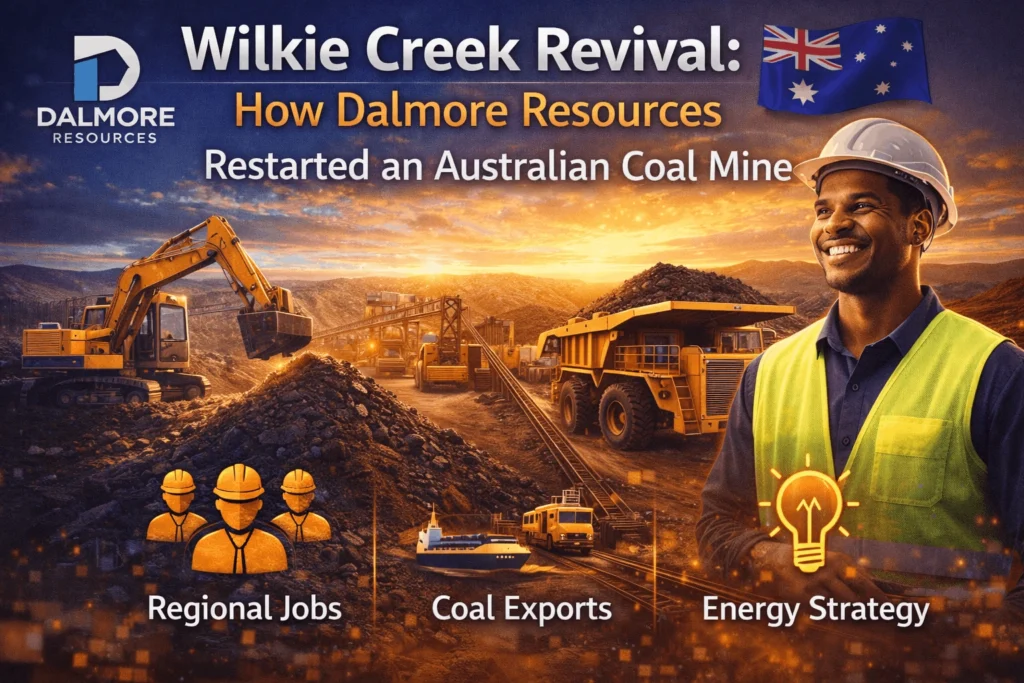

Wilkie Creek’s Revival: How Dalmore Resources Rescued an Australian Mine — And Why Regional Australia Is Watching Closely

Synopsis
Not every turnaround story comes from Silicon Valley. Some happen far from venture capital headlines — in dusty regional towns where the local mine isn’t just a business… it’s the backbone of the community.
That’s exactly the case with the revival of the Wilkie Creek coal mine in Queensland, Australia. After years of operational uncertainty and ownership transitions, Dalmore Resources stepped in and brought the site back into active production. And to be honest, this isn’t just about coal. It’s about regional employment, export economics, energy market timing, and whether resource turnarounds can still make sense in a decarbonizing world.
You might be wondering — why does reopening one mine matter?
Because when a single regional asset restarts, it triggers ripple effects: jobs return, contractors re-engage, transport networks activate, and export volumes shift. In energy markets, timing is everything. And Wilkie Creek’s revival happened at a moment when global coal demand, particularly for thermal coal, was seeing renewed volatility.
This deep dive explores how Dalmore Resources revived Wilkie Creek, what operational and market strategies were involved, and what this means for regional growth, Australian mining investment, and energy-sector turnarounds globally.
A Mine That Refused to Disappear
Wilkie Creek isn’t new. Located in Queensland’s Surat Basin, the mine has had a long operational history, producing thermal coal primarily for export markets in Asia.
But like many resource assets, it faced a familiar cycle:
Ownership changes.
Market downturns.
Operational pauses.
Uncertainty.
And when commodity prices dip, marginal mines often shut first. Investors pull back. Communities brace themselves.
So when Dalmore Resources acquired the asset and moved toward restarting operations, it wasn’t just a transactional event. It was a calculated risk.
Because restarting a coal mine in today’s climate isn’t exactly fashionable.
Why Dalmore Took the Bet
Let’s be clear. Mining turnarounds are expensive. Restarting infrastructure, rehiring workforce, renegotiating supply contracts — none of it is small money.
So why step in?
1. Commodity Cycle Timing
Coal markets — especially thermal coal — have experienced sharp price swings over the last few years. Energy supply disruptions, geopolitical tensions, and global power demand created periods of elevated pricing.
And in commodities, timing is half the game.
Dalmore’s move suggests a classic resource strategy: acquire underperforming or paused assets, optimize operations, and capitalize when the pricing cycle turns favorable.
It’s not flashy. It’s cyclical investing.
2. Existing Infrastructure Advantage
Wilkie Creek wasn’t a greenfield project. That matters.
The site already had established infrastructure:
- Rail connectivity
- Export pathways
- Operational footprint
- Workforce familiarity
Reactivating existing assets is significantly cheaper than building new ones from scratch.
And honestly, in capital-intensive sectors, sunk infrastructure is gold.
3. Regional Economic Leverage
Resource projects in regional Australia don’t operate in isolation. They support:
- Local contractors
- Equipment suppliers
- Transport operators
- Accommodation providers
- Retail businesses
When a mine shuts, towns feel it. When it reopens, they breathe again.
Dalmore’s decision wasn’t purely economic — it was also regionally strategic.
Operational Reset: What a Mine Revival Actually Involves
People often think restarting a mine is like flipping a switch.
It’s not.
There’s environmental compliance. Workforce re-mobilization. Safety audits. Equipment recalibration. Export contract alignment. And yes, regulatory oversight.
Mining in Australia operates under strict environmental and operational frameworks. Restarting requires meeting modern compliance standards — not just dusting off old systems.
And here’s the part that doesn’t get talked about enough: talent.
When a mine shuts, skilled workers relocate. Restarting means attracting them back or training new hires. That takes time and investment.
Dalmore’s operational challenge wasn’t just geological. It was human.
What This Means for Regional Growth
Let’s zoom out for a second.
Regional growth in resource-heavy economies often depends on:
- Stable commodity demand
- Infrastructure continuity
- Investor confidence
Wilkie Creek’s revival sends a signal. It suggests that under the right market conditions, previously paused assets can return to productive life.
For regional Queensland, that means:
- Employment stabilization
- Strengthened export throughput
- Improved local business liquidity
- Confidence in mining-sector continuity
And confidence, especially in smaller communities, is economic fuel.
But What About Energy Transition?
Here’s where things get nuanced.
Global energy conversations increasingly focus on renewables, decarbonization, and net-zero targets. So where does a thermal coal mine fit in that narrative?
The reality is complex.
While long-term global trends point toward renewable expansion, many Asian economies still rely heavily on coal-fired power generation. Infrastructure transitions take time. Grid modernization takes time. Storage technology scaling takes time.
In transitional decades, thermal coal remains part of the energy mix.
Does that mean it’s permanent? Probably not.
But it does mean assets like Wilkie Creek can still operate within market demand windows.
The Risk Side Nobody Ignores
Let’s not romanticize it.
Mining turnarounds carry risks:
- Commodity price collapse
- Policy shifts
- Export demand changes
- ESG investor pressure
- Environmental activism
Dalmore’s strategy works only if operational efficiency aligns with market timing.
And if global coal demand contracts faster than expected, margins shrink quickly.
Resource investing is high reward. High volatility.
What Is the Wilkie Creek Mine Revival and Why Does It Matter?
The Wilkie Creek mine revival refers to the restart of a previously paused coal mining operation in Queensland by Dalmore Resources. The turnaround matters because it restores regional employment, reactivates export infrastructure, and reflects strategic timing in global coal markets. It also highlights how resource assets can be restructured and reintroduced into production under favorable commodity cycles.
Lessons for Broader Corporate Turnarounds
Even if you’re not in mining, there are clear strategic lessons here.
1. Distressed Assets Aren’t Dead Assets
Sometimes value hides in paused operations. With proper timing and restructuring, they can generate renewed returns.
2. Infrastructure Is a Strategic Advantage
Existing logistics and operational footprint reduce restart risk.
3. Regional Economics Matter
Turnarounds don’t just impact balance sheets. They affect communities.
And investors increasingly consider regional impact in strategic decision-making.
4. Timing Is Everything
Commodity businesses live and die by cycles. Recognizing the upswing window is critical.
A Broader Signal in Energy Markets
Wilkie Creek’s revival reflects something larger: the tension between long-term energy transition goals and short-term energy security realities.
In moments of global supply strain, traditional energy sources often regain relevance.
And resource companies that understand this timing dynamic can create opportunity where others see decline.
Final Thoughts
To be honest, this isn’t a glamorous startup story. There are no pitch decks. No seed rounds. No viral product launches.
It’s heavy machinery. Rail lines. Commodity contracts.
But corporate turnarounds don’t always happen in boardrooms. Sometimes they happen in open pits under the Australian sun.
Dalmore Resources’ decision to revive Wilkie Creek represents a calculated bet on commodity timing, infrastructure leverage, and regional economic renewal.
Whether it becomes a long-term success depends on market cycles, operational discipline, and evolving global energy policies.
But one thing’s certain.
When a mine restarts in a regional town, it’s not just production that resumes.
It’s momentum.
Summary
Article Name
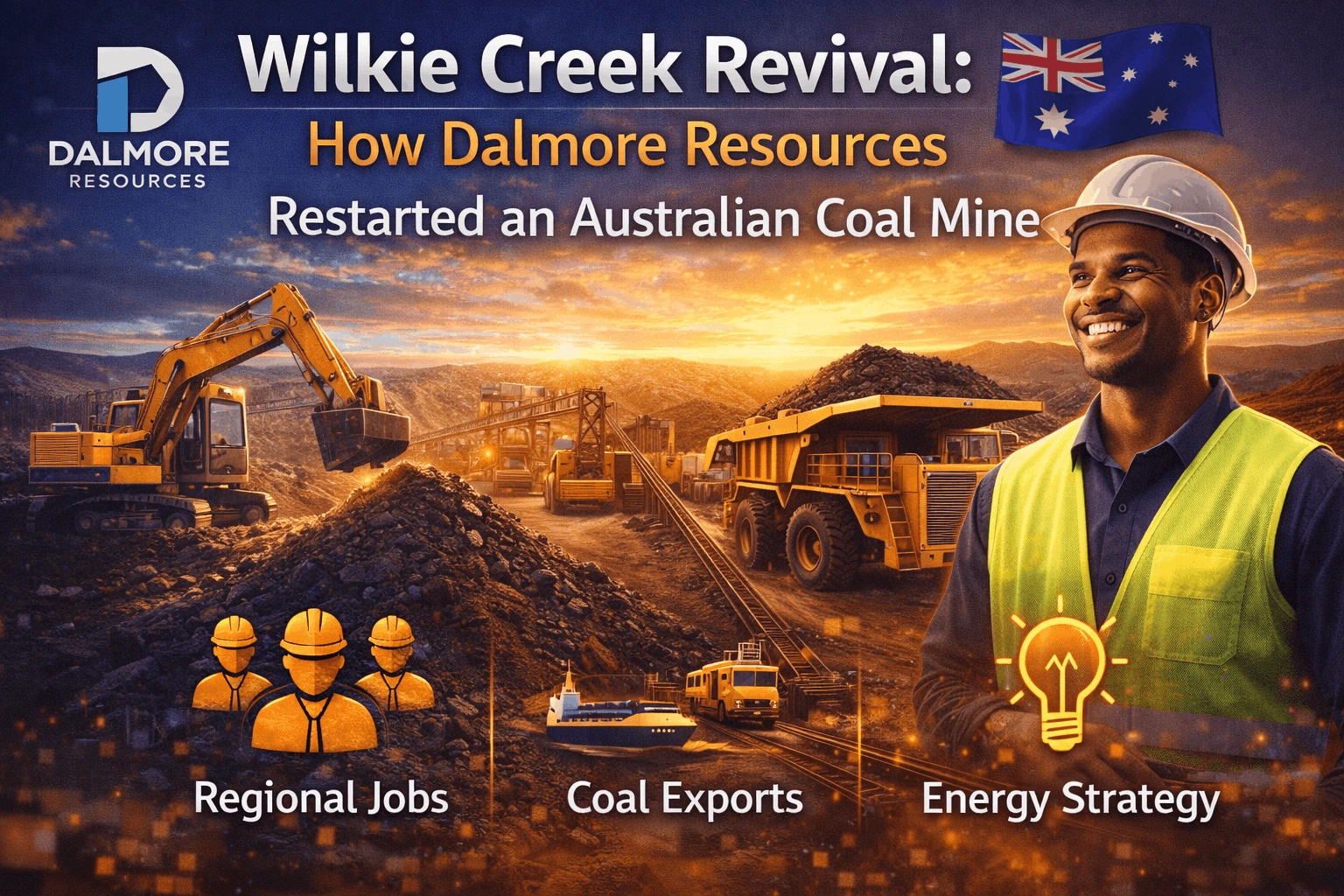
Wilkie Creek Revival: How Dalmore Resources Restarted an Australian Coal Mine
DescriptionWilkie Creek’s revival under Dalmore Resources marks a significant corporate turnaround in Australia’s mining sector. Explore how the mine’s restart impacts regional jobs, export markets, and energy strategy.
Author
Upstartzen Editorial Team
Publisher Name
Upstartzen


