
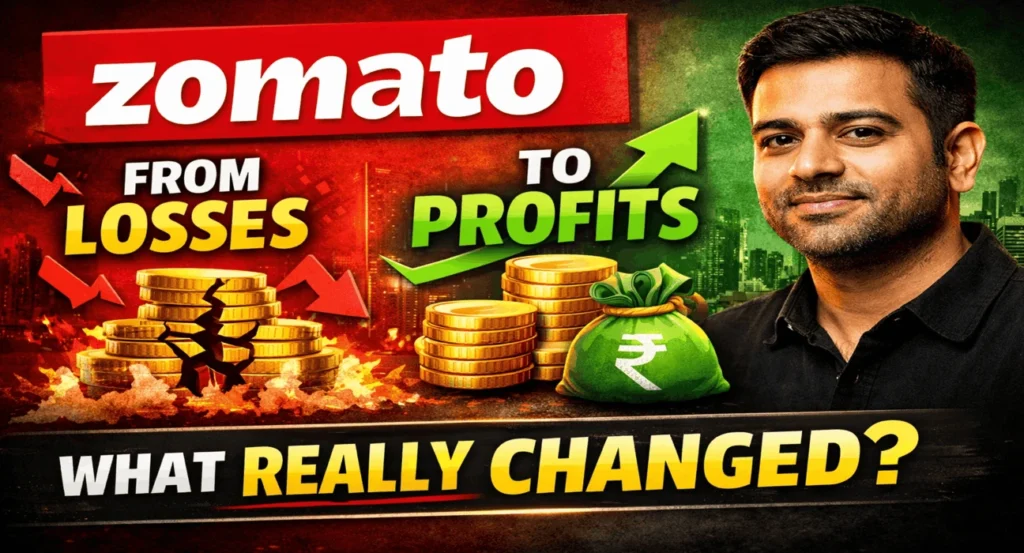

Zomato’s Path to Profitability: What Actually Changed
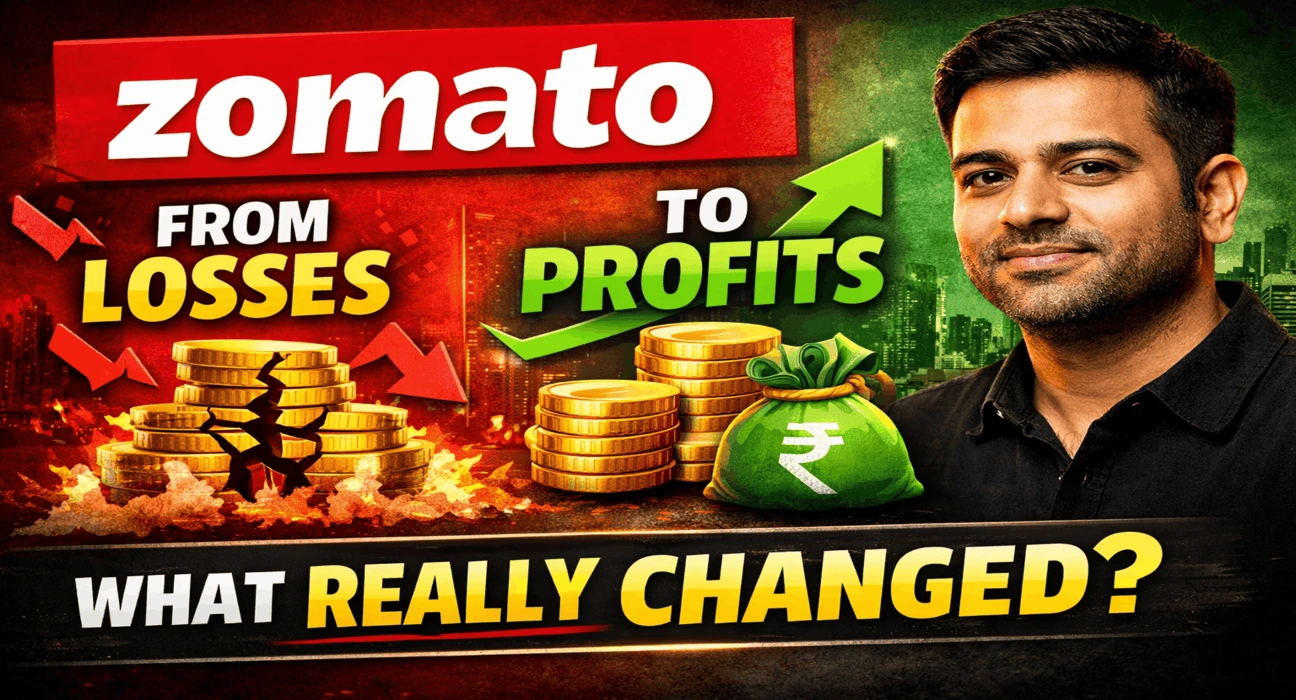
For years, Zomato was the textbook example of a high-growth, low-profit internet company.
Revenue grew.
Orders scaled.
Losses widened.
And then something unusual happened.
It didn’t just “cut costs” and become profitable.
Zomato redesigned how its business makes money—at a unit level, not just at scale.
That distinction is where most analyses fall short.
The Real Problem Wasn’t Losses. It Was Unit Economics.
At peak burn phases (around 2019–2022), Zomato’s challenge wasn’t demand.
Demand was strong.
The issue was this:
Every additional order didn’t meaningfully improve profitability.
Why?
Because the model had structural leaks:
- Heavy discounting to acquire users
- High delivery partner costs
- Low restaurant commissions (due to competition)
- Inefficient last-mile logistics
Growth was happening.
But efficiency wasn’t compounding.
A Quick Snapshot (Numbers That Matter)
Without getting lost in quarterly noise, here’s the directional shift:
- Order volumes: Continued growth
- GOV (Gross Order Value): Increased steadily
- Adjusted EBITDA: Moved from negative to positive territory (FY23–FY24 phase)
- Contribution margin per order: Turned positive
These are not cosmetic improvements.
They signal something deeper:
The system started working in Zomato’s favor, not against it.
What Actually Changed (The Turning Points)
1. From Growth-at-All-Costs → Controlled Growth
Zomato didn’t stop growing.
It redefined what “good growth” means.
- Reduced excessive discounting
- Focused on higher-quality customers (repeat users)
- Prioritized profitable geographies over vanity expansion
This is subtle but critical.
Growth is easy when you subsidize it.
Sustainable growth is not.
2. Delivery Economics: Fixing the Hardest Layer
Food delivery looks simple from the outside.
It isn’t.
Each order involves:
- Restaurant prep time
- Rider allocation
- Route optimization
- Customer expectations (speed)
Zomato improved:
- Delivery batching (multiple orders per trip where possible)
- Route efficiency using better logistics intelligence
- Reduced idle time for delivery partners
Even small improvements here have compounding effects.
In logistics-heavy businesses, 1% efficiency gain can change the entire P&L.
3. Take Rate Expansion (Without Breaking the System)
Zomato gradually improved its take rate (commission + fees from restaurants and customers).
But this had to be done carefully.
Push too hard:
👉 Restaurants churn
Go too soft:
👉 Margins stay weak
So the strategy was layered:
- Introduce platform fees for customers
- Improve visibility tools for restaurants (justify higher commissions)
- Build premium placement ecosystems
This is not pricing.
This is value extraction with justification.
4. The Blinkit Factor: Risk That Paid Off
The acquisition of Blinkit was widely criticized initially.
Why?
Because:
- Quick commerce is capital-intensive
- Margins were unclear
- Integration risks were high
But over time, Blinkit did two things:
- Increased Zomato’s frequency layer
(Users ordering more often, not just meals) - Built a high-intent convenience use case
(Urgent needs vs planned food orders)
This changed user behavior.
Zomato was no longer just a food app.
It became part of daily consumption infrastructure.
5. Customer Behavior Shift (Underrated Factor)
Earlier:
- Users chased discounts
Now:
- Users value convenience, reliability, and speed
This shift allowed Zomato to:
- Reduce discount burn
- Introduce fees
- Improve margins without massive drop-offs
This is rare.
Most platforms don’t get this transition right.
The Non-Obvious Insight
Most people think:
👉 Zomato became profitable because it scaled.
That’s incomplete.
Zomato became profitable when it stopped forcing scale and started optimizing behavior.
- Customer behavior
- Delivery partner behavior
- Restaurant behavior
It aligned all three.
That’s much harder than growth.
A Simple Mental Model
Think of Zomato’s business like a three-sided marketplace flywheel:
Customers ↔ Restaurants ↔ Delivery Partners
Earlier:
- Each side needed heavy incentives
Now:
- Each side finds organic value
When that happens:
👉 Subsidies reduce
👉 Margins improve
👉 System stabilizes
Where the Risk Still Exists
This is not a perfect story.
Zomato still faces:
- Competitive pressure from Swiggy
- Thin margins in delivery business
- High expectations from quick commerce
And most importantly:
Profitability in such businesses is not permanent. It’s maintained.
Key Takeaways
- Growth without unit economics is fragile
- Logistics efficiency is a hidden profit driver
- Pricing power must be earned, not forced
- Behavior change is more valuable than cost-cutting
- New verticals (like quick commerce) can unlock frequency, not just revenue
Final Thought
Zomato didn’t discover a new business model.
It refined an existing one—patiently, layer by layer.
And that’s what makes this story more useful than inspirational.
Because most businesses don’t need reinvention.
They need alignment.
FAQs: Zomato Profitability & Strategy
What made Zomato profitable?
Zomato achieved profitability by improving unit economics, reducing discounting, optimizing delivery efficiency, and increasing its take rate.
Is Zomato consistently profitable now?
Zomato has reported profitability in recent quarters, but sustaining it depends on maintaining efficiency and managing competition.
How did Blinkit help Zomato?
Blinkit increased order frequency and expanded Zomato’s use case beyond food delivery into quick commerce, improving long-term growth potential.
Summary
Article Name
Zomato Profitability Breakdown: How It Fixed Unit Economics & Scaled Smartly
DescriptionA deep dive into Zomato’s path to profitability—unit economics, delivery efficiency, Blinkit impact, and the real strategy behind its growth.
Author
Upstartzen Editorial Team
Publisher Name
Upstartzen
Publisher Logo