

Cold Email Automation Playbook: Tools, Templates & Deliverability Setup Guide
Synopsis
This playbook breaks down how SaaS founders and growth teams can build a scalable cold email automation system using modern outreach tools, high-deliverability infrastructure, and human-first templates. Covering everything from domain warm-up and authentication to lead sourcing, personalization, and reply-focused metrics, the guide highlights how startups can turn cold outreach into a reliable, compliant, and conversion-driven growth channel without relying solely on paid ads.
Perfect if you’re in SaaS or outreach-heavy growth mode
Let’s be honest for a second. Cold email has a bit of a bad reputation. You probably picture spammy subject lines, generic “Hi {{FirstName}}” intros, and inboxes that hit delete faster than you can say “growth hack.”
But here’s the thing. When it’s done right, cold email isn’t spam. It’s a quiet, powerful sales engine that just… runs. In the background. While you’re building product, pitching investors, or chasing your next round of users.
And yeah, you might be wondering, “Does this still work in 2026?”
Short answer: absolutely.
Longer answer: it works if you respect the system. The inbox. The human on the other side. And the tech that decides whether your email even gets seen.
So let’s walk through a real-world, no-fluff playbook. Tools. Templates. Deliverability. The stuff people usually gloss over. But this is where the game is actually won.
What Cold Email Automation Really Means (And What It Doesn’t)
Cold email automation doesn’t mean blasting 10,000 people and praying for replies.
It means building a system that sends personal-feeling emails at scale. Think of it like setting up a coffee machine for your sales team. You still choose the beans. You still care about the taste. But now, you’re not manually boiling water every single time.
Automation handles:
- Sending sequences
- Following up
- Tracking opens and replies
- Pausing when someone responds (this part is huge, by the way)
But you still control:
- Who you target
- What you say
- And how human it feels
What is cold email automation?
Cold email automation is the process of using software tools to send personalized email sequences to prospects at scale, while maintaining high deliverability and human-like messaging to generate replies, leads, and conversions without manual follow-ups.
The Core Stack: Tools You Actually Need
Let’s not overcomplicate this. You don’t need 14 tools duct-taped together. You need a clean, reliable stack.
1. Email Sending Infrastructure
This is your foundation. Mess this up, and everything else falls apart.
You’ll need:
- A dedicated domain (not your main website domain)
- Google Workspace or Microsoft 365 inboxes
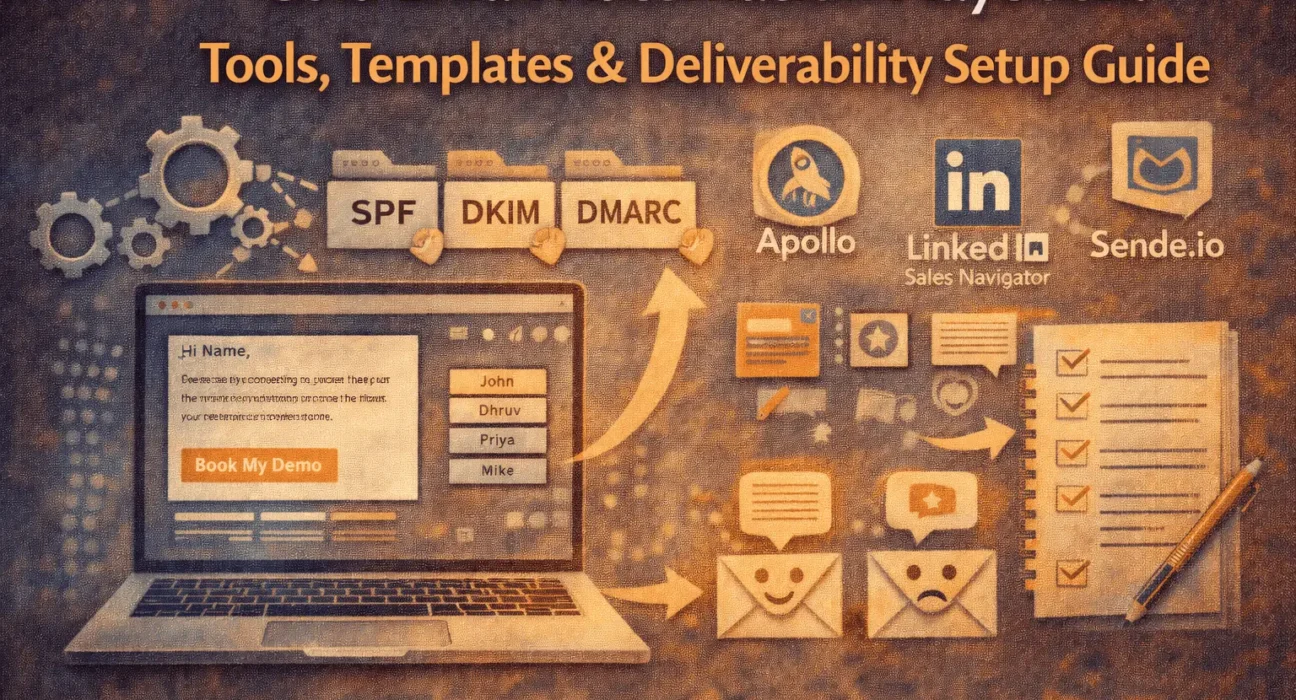
- Proper DNS setup (SPF, DKIM, DMARC)
If you want a walkthrough, Google has a decent guide on email authentication here:
SPF, DKIM, and DMARC setup guide:
https://support.google.com/a/answer/33786
And yeah, I know. This part feels technical and boring. But skipping it is like building a house without checking if the ground is solid.
2. Automation Platforms
These are your “control centers.”
Popular options in SaaS and B2B:
What you’re looking for:
- Inbox rotation
- Auto-pause on reply
- Spintax or dynamic personalization
- Warm-up features
If it doesn’t do those, don’t overthink it. Move on.
3. Lead Sources
Good emails sent to bad leads are still bad emails.
Solid sources:
And here’s a small, old-school tip that still works: spot-check your list. Open profiles. Look at job titles. Make sure these are real humans who could actually say “yes.”
Deliverability Setup: The Quiet Hero of Cold Email
Nobody brags about deliverability on LinkedIn. But every serious operator obsesses over it.
Step 1: Domain Warm-Up
Don’t send 100 emails on day one. That’s like sprinting out of bed after being asleep for a year.
Start with:
- Day 1–2: 10–15 emails
- Day 3–5: 25–40
- Day 7+: 50–100 per inbox
Most tools automate this. Let them. Your future self will thank you.
Step 2: Authentication (Non-Negotiable)
Set up:
- SPF
- DKIM
- DMARC
If you don’t, Gmail and Outlook will quietly push you into spam. No warning. No apology. Just silence.
Step 3: Smart Sending
- Avoid links in your first email
- Avoid images
- Keep it text-only, like a normal person wrote it
Because, well, that’s what inbox algorithms trust.
Templates That Don’t Feel Like Templates
Let’s talk copy. This is where most people go robotic.
Here’s a simple, human-style structure:
The “Curious, Not Desperate” Framework
Subject: Quick question, {{FirstName}}
Hey {{FirstName}},
Not sure if this is relevant for you, but I came across {{Company}} while looking into teams working on {{specific detail}}.
We’ve been helping SaaS teams book more demos without increasing ad spend, and I thought it might be worth a quick chat.
If it’s not a priority right now, no worries at all. Just thought I’d ask.
Best,
{{YourName}}
And look, it’s not fancy. That’s the point. It reads like something you’d actually send.
Follow-Up (The Gentle Nudge)
But people are busy. So you follow up.
Hey {{FirstName}},
Just bubbling this up in case it slipped through. Happens to me all the time, to be honest.
Worth a quick look, or should I circle back another time?
— {{YourName}}
No pressure. No “FINAL NOTICE.” Just human.
Personalization That Actually Matters
Adding someone’s first name isn’t personalization anymore. That’s table stakes.
Try:
- Recent LinkedIn post
- Company hiring news
- A feature they launched
- A podcast they appeared on
One real line beats five fake ones.
And yeah, this takes effort. But that’s why it works.
A Simple SaaS Outreach Flow (Real-World Example)
Let’s say you’re selling a B2B SaaS tool for HR teams.
Your flow might look like:
- Pull HR Managers from Apollo
- Filter by company size (50–500 employees)
- Launch a 4-step sequence over 10 days
- Route replies to a shared inbox or Slack
And here’s the underrated part: track replies, not opens. Opens are vanity. Replies are revenue.
Metrics That Actually Mean Something
Watch these:
- Reply rate (8–15% is solid)
- Positive reply rate (2–5% is good in SaaS)
- Bounce rate (keep it under 5%)
If bounces go up, stop. Fix your list. Fix your domain. Don’t push through it like nothing’s wrong.
Legal & Trust Stuff (Yes, This Matters)
Cold email is legal in many regions if you follow the rules.
Basic checklist:
- Include your company name
- Include a way to opt out
- Don’t mislead
If you’re unsure, CAN-SPAM guidelines are a good reference:
https://www.ftc.gov/business-guidance/resources/can-spam-act-compliance-guide-business
Trust is part of conversion. Always has been. Always will be.
Where Most Startups Mess This Up
They automate too fast.
They don’t test messaging.
They blame the tool instead of the targeting.
And then they say, “Cold email doesn’t work anymore.”
But in reality? They just skipped the boring parts. The setup. The warming. The list quality. The human copy.
That’s where the edge is.
Quick Setup Checklist (Bookmark This)
- Buy secondary domain
- Set up SPF, DKIM, DMARC
- Warm inboxes for 7–14 days
- Build a clean lead list
- Write 2–3 human templates
- Launch small
- Scale slow
It’s not sexy. But it’s effective.
Final Thought
Cold email automation is kind of like compound interest. It’s slow at first. Almost boring. Then one day, you check your inbox and realize you’ve got demos booked for the week without touching a thing.
And that’s when it clicks.
You didn’t just send emails. You built a system.
Summary

Article Name
Cold Email Automation Playbook: Tools, Templates & Deliverability
DescriptionLearn how SaaS teams use cold email automation tools, human templates, and deliverability setup to book demos and scale outreach without spam.
Author
Upstartzen Editorial Team
Publisher Name
Upstartzen