



SEO Growth Framework for Scaling Brands (From Zero to Authority Site)
Synopsis
In today’s competitive digital market, brands don’t grow through random blogging or keyword stuffing. They grow by treating SEO as infrastructure, not a checklist. Modern startups are adopting structured SEO frameworks that combine technical SEO, topic clusters, backlink ecosystems, and performance analytics to build long-term digital authority.
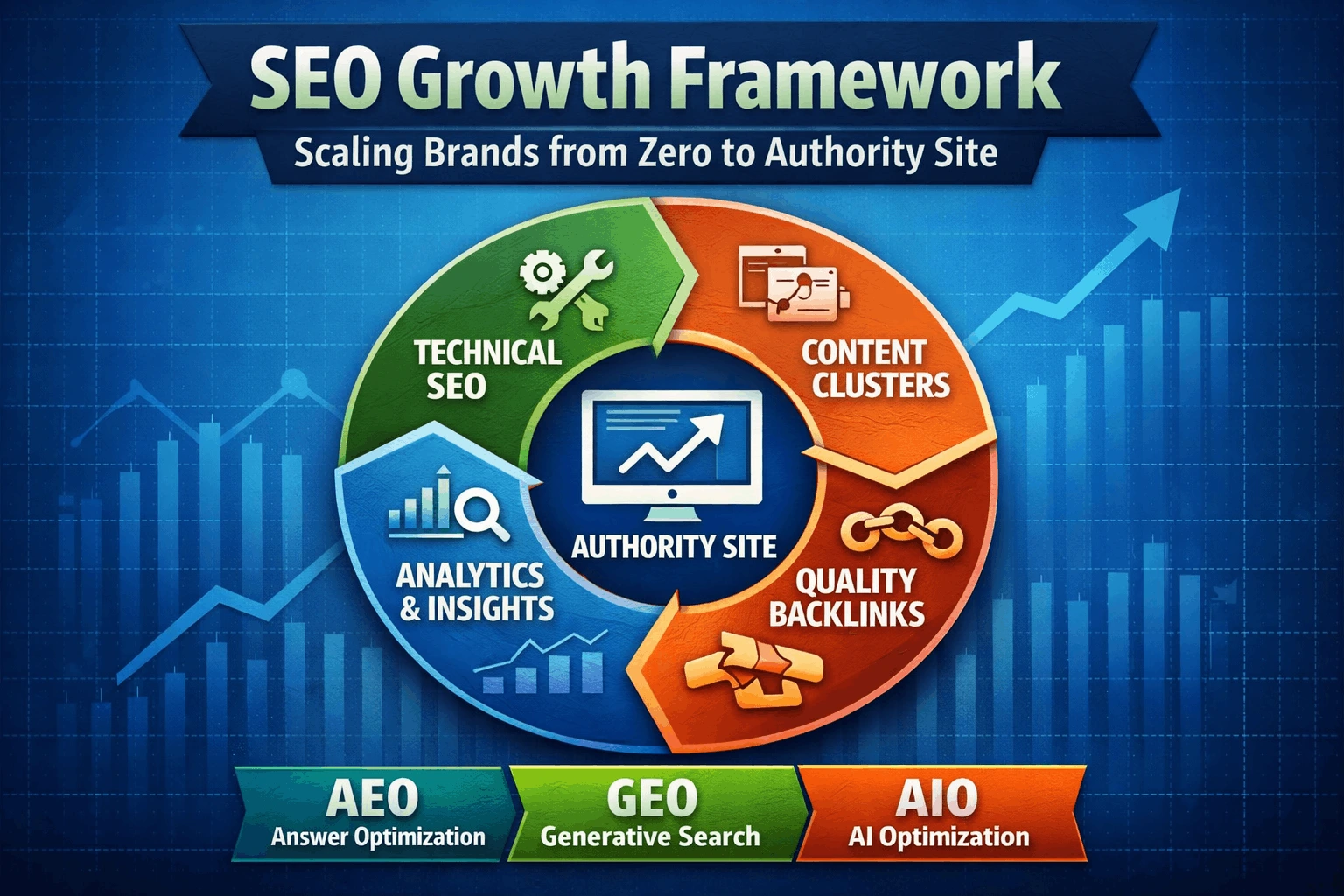
This shift isn’t about chasing algorithms — it’s about creating compounding visibility, trust, and conversions. The new SEO growth model focuses on three key layers: AEO (Answer Engine Optimization), GEO (Generative Engine Optimization), and AIO (AI Optimization). Together, they help brands appear not only in search engines but also across AI-driven search and voice platforms.
Startups that build structured SEO foundations early often become authority brands within 12–24 months, reducing reliance on paid acquisition and building sustainable inbound growth.
Why Traditional SEO is Failing Scaling Brands
Let’s be real for a second.
Most brands still treat SEO like posting blogs every week and hoping traffic magically appears. It doesn’t. In fact, it rarely does.
Search engines today evaluate websites like they evaluate real-world experts. They check consistency, credibility, topical depth, and trust signals. It’s less like keyword stuffing and more like building a reputation — sort of like becoming the go-to doctor in your city.
And here’s the twist…
Google’s Helpful Content Updates and AI-driven search experiences have changed ranking priorities dramatically. According to the official Google Search Central documentation (https://developers.google.com/search/docs/fundamentals/creating-helpful-content), search engines now reward content built primarily for users, not algorithms.
So brands need structure. A system. A repeatable growth framework.
The SEO Growth Framework: From Zero to Authority Site
1. Technical SEO: Building the Digital Foundation
Before writing content or chasing backlinks, technical SEO acts like the wiring behind your house. You don’t see it. But if it’s broken, nothing works properly.
Key Technical SEO Elements
Site Architecture & Crawlability
Search engines need to understand your website hierarchy easily. Clean URL structures, internal linking, and proper navigation signals help crawlers map your content efficiently.
For example, a structured hierarchy like:
- Domain → Service Page → Sub Services → Blogs → Case Studies
This builds topical authority naturally.
Google’s crawling best practices are explained here:
Google Crawling & Indexing Guide
Core Web Vitals & Page Speed
Users don’t wait anymore. If your site loads slowly, they bounce. And search engines track that.
Core Web Vitals measure:
- Loading speed
- Visual stability
- Interactivity
You can analyze this through
PageSpeed Insights Tool
To be honest, startups often skip this because it feels technical. But poor performance quietly kills rankings.
Schema Markup for AEO
Schema helps search engines understand your content context. It increases visibility in featured snippets, FAQs, and voice search.
And this is where AEO really kicks in — optimizing your content to directly answer user questions.
What is an SEO Growth Framework?
An SEO Growth Framework is a structured strategy that combines technical SEO, content cluster planning, backlink authority building, and analytics-driven optimization to scale organic search visibility, improve brand authority, and generate consistent inbound traffic.
2. Content Clusters: The Authority Builder
Content clusters aren’t just blog collections. Think of them like knowledge ecosystems.
Instead of publishing isolated articles, brands create pillar pages supported by multiple related subtopics. This signals expertise depth to search engines.
How Content Clusters Work
Example:
Pillar Topic: SaaS Marketing Strategy
Supporting Clusters:
- SaaS SEO strategies
- SaaS customer acquisition models
- SaaS content marketing funnels
- SaaS onboarding optimization
According to HubSpot’s topic cluster research:
Topic Cluster SEO Model
This method improves internal linking, dwell time, and ranking consistency.
But here’s something interesting… content clusters are now essential for GEO (Generative Engine Optimization). AI search models prefer structured knowledge depth over scattered blog content.
3. Backlinks: Authority & Trust Amplifier
Backlinks remain one of the strongest ranking signals. But not all backlinks help. Some actually damage credibility.
Modern SEO focuses on relevance-based authority links rather than mass directory submissions.
Effective Backlink Strategies
- Digital PR campaigns
- Founder thought leadership articles
- Industry research reports
- Guest insights on niche platforms
For instance, earning links from trusted platforms like
Ahrefs SEO Learning Hub
signals domain trust and topical credibility.
Backlinks today act like online recommendations. The stronger your references, the higher your authority.
4. Analytics Mapping: The Growth Intelligence Engine
This part is often ignored. And honestly, it’s where most scaling brands lose growth clarity.
Analytics mapping tracks user journey patterns, keyword performance, conversion touchpoints, and content effectiveness.
Key SEO Analytics Layers
- Keyword intent mapping
- Funnel stage performance tracking
- User behavior flow analysis
- Conversion attribution modeling
Using tools like
Google Analytics 4 SEO Tracking Guide
helps brands understand which content drives awareness, engagement, and revenue.
And here’s the real benefit — analytics converts SEO from guesswork into predictable growth engineering.
Integrating AEO, GEO & AIO into the Framework
Search is no longer just about Google results pages.
AEO (Answer Engine Optimization)
Optimizes content to appear in:
- Featured snippets
- Voice search answers
- FAQ rich results
GEO (Generative Engine Optimization)
Prepares content to rank inside AI-generated search platforms like ChatGPT, Google SGE, and Perplexity. Structured content, entity clarity, and contextual authority become critical here.
AIO (AI Optimization)
Focuses on training AI models to reference your brand as a reliable source. This includes:
- Structured knowledge databases
- Entity optimization
- Brand signal strengthening
In simple terms… SEO today isn’t just search engine optimization. It’s search ecosystem optimization.
Timeline: How Brands Typically Scale Authority
You might be wondering how long this takes. Fair question.
Most authority site growth follows this pattern:
- Months 1–3: Technical fixes + foundational content
- Months 4–8: Content cluster expansion + backlink acquisition
- Months 9–18: Authority compounding + brand search growth
- Months 18–24: Market leadership positioning
And yes, it sounds slow. But the ROI becomes exponential once authority is built.
Common Mistakes Startups Make
Let’s call them out.
- Publishing random blogs without topic strategy
- Ignoring technical SEO
- Buying low-quality backlinks
- Tracking vanity metrics instead of conversions
- Avoiding analytics implementation
These mistakes usually delay authority growth by years.
The Future of SEO Growth Frameworks
SEO is shifting toward experience-driven ranking signals. Search engines increasingly evaluate:
- Content authenticity
- Author credibility
- Brand trust signals
- Engagement depth
- AI content understanding
According to Search Engine Journal’s SEO trend report:
Future of AI and SEO
Brands that treat SEO as infrastructure — not marketing expense — will dominate organic ecosystems.
Final Thoughts
To be honest, building an authority site isn’t glamorous work. It’s slow, strategic, sometimes frustrating. But it’s also one of the most defensible growth channels a brand can build.
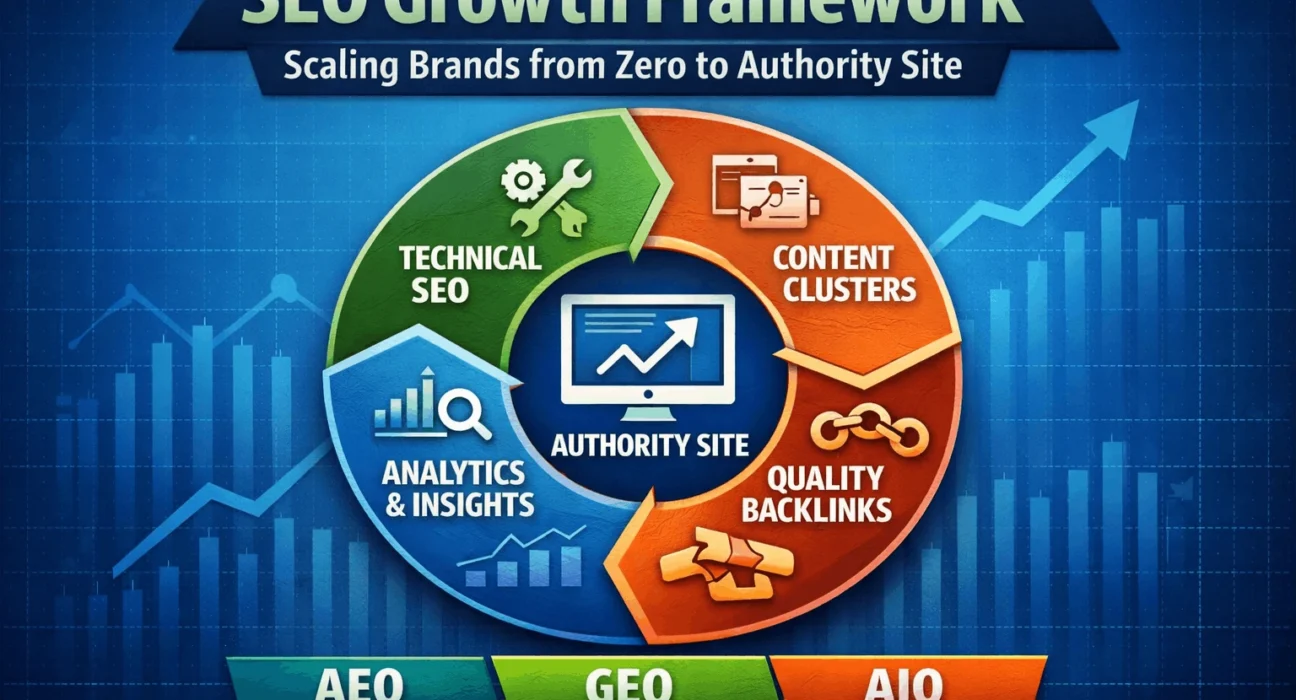
Technical SEO gives you structure. Content clusters build expertise. Backlinks establish credibility. Analytics mapping ensures you scale intelligently.
Put them together… and you don’t just rank. You lead.
And honestly, in a world where paid ads keep getting expensive and attention spans keep shrinking, organic authority might just be the most valuable digital asset brands can own.
Summary
Article Name
SEO Growth Framework for Scaling Brands: From Zero to Authority Site
DescriptionDiscover how startups and scaling brands build authority websites using technical SEO, content clusters, backlinks, and analytics mapping. Learn modern SEO frameworks designed for AI search, voice search, and organic growth visibility.
Author
Upstartzen Editorial Team
Publisher Name
Upstartzen