



Founder Visibility vs Founder Exhaustion: Where’s the Line?
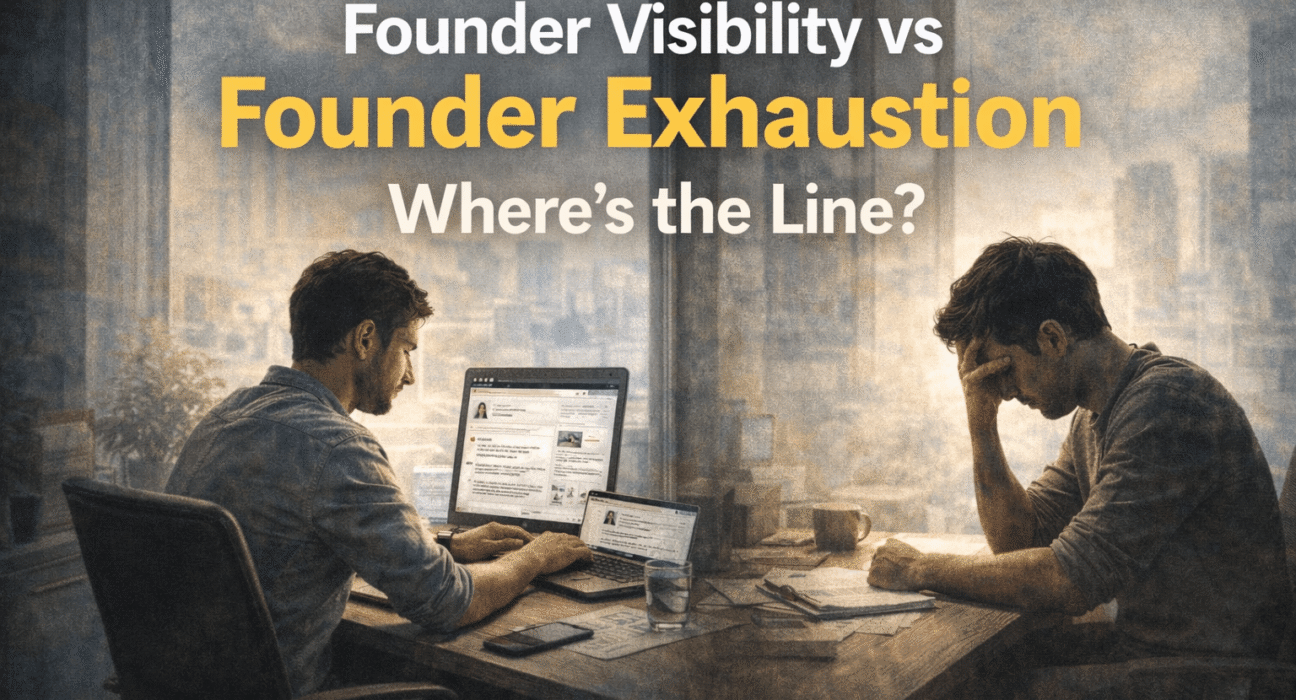
Where’s the line between healthy founder visibility and founder burnout?
The line generally appears when posting shifts from something a founder chooses to do because they have something to say, to something they feel obligated to do to avoid disappearing. The platform mechanics make this pressure real, not imagined: LinkedIn’s algorithm gives outsized weight to engagement in the first 30–60 minutes after a post goes live, and separate analysis has found audience fatigue sets in around 12–15 posts a month, after which engagement per post starts declining. Founders chasing constant visibility are, in a real sense, fighting both their own energy and a platform mechanic that punishes both under-posting and over-posting.
Founder-Led Branding Isn’t Optional Anymore — That’s the Real Shift
A few years ago, a founder’s public presence was a nice-to-have. Now it’s closer to infrastructure. Founders including Kunal Shah and Nikhil Kamath have built podcasts with over a million subscribers each, turning public thinking into a genuine brand and investment-credibility asset rather than a side project. That’s a real, working strategy — not hype — which is exactly why the pressure to replicate it, even without the same underlying substance, has become so common.
What the Platforms Actually Reward — and What They Don’t
It’s worth being precise here, because the common assumption (“the algorithm just wants volume”) isn’t quite accurate. Research on LinkedIn’s ranking behavior — including Buffer’s 2025 analysis of over two million posts — indicates the platform doesn’t specifically penalize frequent posting, and per-post engagement can remain strong even at higher volumes. But separate analysis of company and creator posting patterns has identified a fatigue threshold around 12–15 posts a month, beyond which engagement per post tends to decline, and posting more than once within 24 hours specifically reduces the reach of the newer post.
The mechanic that matters most isn’t frequency at all — it’s what happens in the first 30 to 60 minutes after a post goes live. Early engagement in that window determines how far the algorithm distributes a post afterward. That single mechanic is arguably the real source of founder anxiety around timing, being “always on,” and feeling like they need to be available to respond the moment something is posted — not a blanket reward for volume.
Where the Pressure Actually Comes From
Two forces compound to create the exhaustion pattern: the platform’s early-engagement mechanic that rewards immediate attentiveness, and the social expectation — real or perceived — that a visible founder owes consistent, vulnerable, insightful content indefinitely. The second one is the more dangerous of the two, because it isn’t actually enforced by the platform; it’s self-imposed, often based on comparing against founders whose visibility is genuinely sustainable because it’s backed by a team, a content system, or simply more capacity than a solo early-stage founder has available.
The Warning Signs Worth Naming Directly
Founder exhaustion around visibility rarely arrives as a dramatic event. It shows up as recycled ideas, posts that feel obligatory rather than considered, a growing dread of opening the platform paired with an inability to stop checking it, and — often — content production quietly outpacing actual business-building time. That pattern is worth taking seriously on its own terms, separate from any platform strategy question: founder burnout carries real personal and business costs, as documented broadly across founder mental health research, including a Sifted survey finding 54% of founders reported burnout in the past year.
What Sustainable Founder Visibility Actually Looks Like
The founders whose public presence holds up longest tend to share a specific pattern: one platform rather than five, a consistent theme rather than reactive trend-following, and a posting rhythm that fits their actual capacity rather than an aspirational content calendar. Kamath’s and Shah’s podcasts work in part because they’re built around genuine, specific expertise rather than an obligation to appear everywhere — depth, not omnipresence, is what the format actually rewards.
Silence, used deliberately, doesn’t erase credibility either. Consistency measured over months matters more than intensity measured over weeks, and a founder stepping back from posting for a period doesn’t reset the trust already built — provided the earlier content was genuinely substantive rather than manufactured for cadence alone.
Frequently Asked Questions
1. Does LinkedIn’s algorithm actually reward founders for posting every day?
No. LinkedIn prioritizes high-quality content and meaningful early engagement over posting frequency alone. Consistently publishing valuable posts that generate discussion is generally more effective than posting every day without a clear purpose.
2. How can a founder tell if their visibility strategy has become unsustainable?
Warning signs include content fatigue, declining engagement quality, and spending more time creating content than building the business. A sustainable personal brand supports business growth rather than becoming a distraction from it.
3. Do founders need to be active on multiple platforms to build a credible public presence?
No. Many successful founders build strong personal brands by focusing on a single platform where their audience is most active. Consistency, expertise, and authenticity usually outperform trying to maintain a presence everywhere.
4. Does taking a break from posting hurt a founder’s credibility?
Generally, no. A temporary break is unlikely to damage credibility if previous content consistently provided value. Long-term trust is built through quality, expertise, and authenticity rather than uninterrupted daily posting.
What to Watch Next
- Whether founder-led content strategies increasingly incorporate deliberate rest periods as burnout awareness grows within the same community driving the founder-branding trend
- Whether platforms adjust algorithmic rewards for early engagement, which is arguably the single biggest driver of the “always available” pressure founders describe
- Whether more founders adopt visible boundary-setting (openly stepping back, batching content, delegating some public-facing work) as a normalized practice rather than a quiet retreat
- How founder visibility strategies evolve as the format matures beyond its current growth phase into a more selective, sustainable pattern
The bottom line: founder visibility and founder exhaustion aren’t opposites that cancel each other out — visibility done with real substance and a sustainable rhythm builds trust; visibility performed out of obligation to a platform mechanic that rewards early attentiveness burns founders out faster than most business pressures do, and it’s worth naming that difference plainly rather than treating all “showing up” as equally valuable.
Platform behavior data cited above is drawn from Buffer’s 2025 LinkedIn Posting Frequency Study, Richard van der Blom’s Algorithm Insights 2025 research, and industry analysis of LinkedIn audience fatigue thresholds. Founder burnout figures are drawn from Sifted’s 2025 founder survey.
Summary

Article Name
Founder Visibility vs Founder Exhaustion: Where’s the Line?
DescriptionFounder-led branding is booming on LinkedIn and X. But where does visibility end and exhaustion begin? A balanced, honest look.
Author
Upstartzen Editorial Team
Publisher Name
Upstartzen