





The Quiet Rise of Profitable Indie Hackers
Synopsis
Not every startup story is loud.
No funding announcements. No viral LinkedIn posts. No “we just raised $10M” headlines.
And yet… something interesting is happening under the surface.
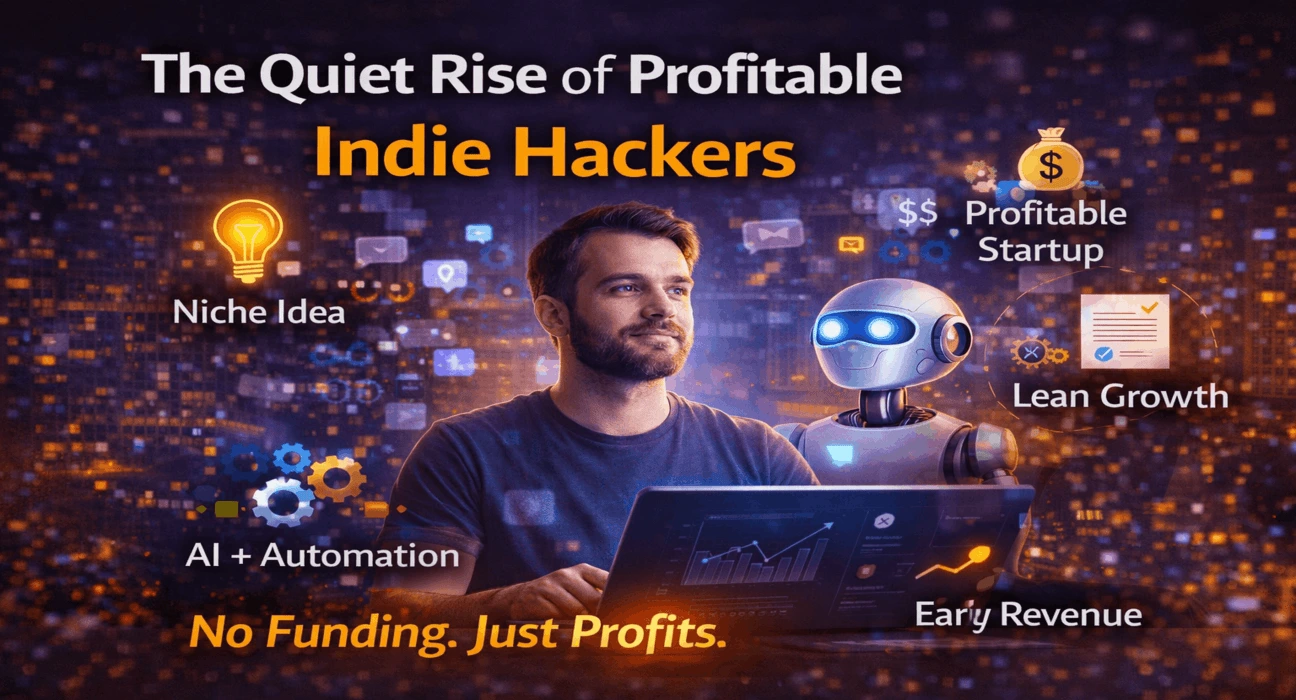
A growing number of solo builders — indie hackers — are quietly building profitable businesses. No hype. No teams. Just consistent revenue.
To be honest, it almost feels like the opposite of what startup culture used to celebrate.
Because for years, success meant scale. Growth at all costs. Venture capital. Big exits.
But now?
Profitability is making a comeback. And indie hackers are leading that shift.
What Is an Indie Hacker?
An indie hacker is an individual who builds and grows a business independently, focusing on profitability rather than rapid scaling through external funding.
They typically:
- Work solo or with a very small team
- Bootstrap their startup (no VC funding)
- Build digital products or SaaS tools
- Prioritize sustainable revenue over hype-driven growth
- Rely on online communities, SEO, and automation
In simple terms, they’re building real businesses — just without the noise.
Why Indie Hackers Are Suddenly Everywhere
You might be wondering… why now?
Why is this model suddenly gaining traction in 2026?
Well, a few things changed.
First, tools became insanely powerful. Platforms like Stripe made it easy to handle payments globally.
Then there’s distribution. Communities like Product Hunt allow creators to launch products without needing a massive marketing budget.
And of course… AI.
AI tools have basically become the “team” for many indie hackers. Content, support, marketing — all partially automated.
So yeah, the barrier to entry dropped. A lot.
The Shift From “Scale Fast” to “Earn Early”
Traditional startup advice used to sound like this:
“Don’t worry about revenue. Focus on growth.”
Indie hackers? They flipped that completely.
They ask:
“Can this make money now?”
And honestly, it’s a refreshing approach.
Instead of chasing users endlessly, they validate ideas quickly. Launch fast. Iterate based on feedback.
If it works, great. If not, they move on.
No drama. No sunk-cost fallacy.
Real Talk: It’s Not As Easy As It Looks
Now, let’s not romanticize this too much.
Being an indie hacker isn’t some chill, passive-income dream.
You’re the:
• developer
• marketer
• customer support
• product manager
All in one.
And yeah, that gets overwhelming.
There’s no team to fall back on. No funding cushion. No safety net.
But… there’s also full control.
And for many, that trade-off is worth it.
Community Is the New Accelerator
Here’s something that doesn’t get talked about enough.
Indie hackers don’t build in isolation anymore.
They share everything.
Revenue numbers. Failures. Experiments.
Platforms like Twitter (X) and niche communities have basically replaced traditional startup incubators.
build in public on Twitter
You’ll see posts like:
“Just hit $1K MRR”
“First paying customer today”
“Failed launch… trying again”
And somehow, that transparency builds trust — and audience — at the same time.
Small Products, Big Impact
Here’s the interesting part.
Most indie hacker products aren’t massive platforms.
They’re simple.
Focused.
Sometimes almost… boring?
Like:
• a niche SaaS tool
• a micro productivity app
• a specialized API
• a content automation tool
But they solve very specific problems.
And that’s enough.
Because when you solve a real pain point, even a small audience can generate meaningful revenue.
Profitability Over Popularity
Let’s be honest again.
Not every indie hacker is famous.
In fact, most aren’t.
They’re not chasing followers or press coverage.
They’re chasing something else: consistent income.
A product making $2K–$10K/month quietly?
That’s a win.
And when you stack multiple products… it adds up.
What Startups Can Learn From Indie Hackers
Even if you’re building a funded startup, there’s a lot to learn here.
Like:
• validate ideas before scaling
• focus on revenue early
• keep operations lean
• listen to users closely
Indie hackers are forced to be efficient.
They can’t afford waste.
And that constraint? It actually becomes an advantage.
The Role of AI in This Movement
It’s impossible to ignore this.
AI is accelerating the indie hacker movement in a big way.
Tasks that used to take hours now take minutes.
Content creation. Market research. Customer support.
All streamlined.
So one person can now do what used to require a small team.
And honestly… we’re just getting started.
The Future of Indie Hacking
So where does this go from here?
We’ll likely see:
• more niche products
• more solo founders
• more “build in public” journeys
• more profitable micro-startups
And maybe — just maybe — a shift in how we define success in startups.
Not unicorns.
Not valuations.
But sustainability.
Final Thoughts
The rise of indie hackers isn’t loud.
It’s not headline-driven.
But it’s real.
And it’s growing.
Because at the end of the day, building a small, profitable, independent business…
That’s kind of the dream, isn’t it?
Summary
Article Name
The Quiet Rise of Profitable Indie Hackers in 2026
DescriptionDiscover how indie hackers are building profitable startups without funding using AI, automation, and lean strategies in 2026.
Author
Upstartzen Editorial Team
Publisher Name
Upstartzen
Publisher Logo