



State of Digital Growth in India’s Tier-2 & Tier-3 Markets -2025 Report
Why Brands Can’t Ignore Bharat’s Next Digital Boom
India’s digital growth story is rapidly expanding beyond metro cities. Tier-2 and Tier-3 markets are emerging as powerful growth hubs, driven by affordable data, rising smartphone adoption, regional content consumption, and increasing digital trust.
Consumers in these regions are not just browsing anymore — they are actively buying, subscribing, booking services, and influencing local communities through digital platforms.
This 2025 report highlights key behavioral trends, platform preferences, buying psychology, and marketing strategies brands must adopt to successfully connect with India’s next 300 million digital consumers.
The Shift Everyone Saw Coming… But Few Prepared For
Let’s be honest. For a long time, brands assumed digital maturity existed only inside metro ecosystems. And yeah, that made sense earlier. Infrastructure, payment adoption, logistics reliability — metros had the early advantage.
But things changed. Cheap mobile data changed everything. UPI changed buying behavior. And regional creator ecosystems built digital confidence.
Today, cities like Indore, Coimbatore, Vizag, Nagpur, Surat, Patna, Lucknow, and even smaller district towns are becoming digital-first consumption hubs. Not digital followers. Digital drivers.
And here’s where it gets interesting.
Consumers in Tier-2 and Tier-3 regions often show stronger brand loyalty once trust is built. They may take slightly longer to convert initially, but when they do, retention numbers tend to surprise marketers.
What Is Driving Digital Growth in India’s Tier-2 & Tier-3 Markets?
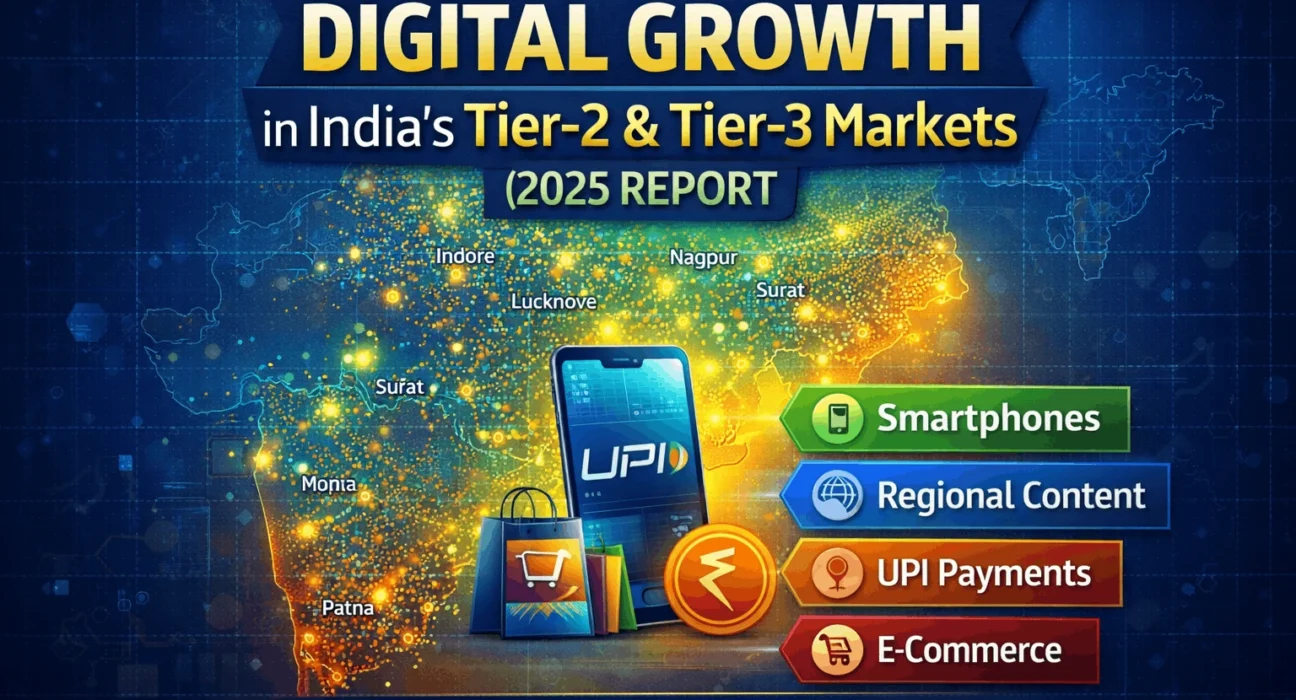
Digital growth in India’s non-metro cities is fueled by affordable mobile internet, increasing smartphone penetration, widespread UPI-based payment adoption, expansion of regional language content, and growing trust in online commerce platforms.
Together, these factors are transforming Tier-2 and Tier-3 cities into high-growth digital consumer markets for brands expanding beyond metropolitan audiences.
The Smartphone Revolution: The Real Game Changer
You might be wondering — why now?
Simple answer: smartphones stopped being luxury devices. They became daily tools. Almost like electricity. You don’t think about it. You just expect it to work.
By 2025, Tier-2 and Tier-3 India is witnessing massive smartphone penetration powered by budget Android devices, localized UI experiences, and pre-installed vernacular apps.
And here’s something brands sometimes underestimate — smartphone adoption doesn’t just increase browsing. It increases digital confidence.
Users are now comfortable:
- Making payments via UPI
- Ordering groceries online
- Watching long-form educational content
- Booking healthcare services digitally
- Joining creator communities
The digital ecosystem isn’t new anymore. It’s routine.
The Rise of Vernacular Internet Culture
To be honest, English-first marketing strategies struggle heavily in these markets.
Regional language content isn’t optional anymore. It’s survival.
Platforms like YouTube, ShareChat, Moj, and regional OTT platforms are shaping consumer education and brand discovery. Users trust content creators speaking their language — literally and culturally.
According to data trends available through Internet user behavior insights from IAMAI, regional language internet consumption continues to grow faster than English content consumption across emerging Indian markets.
And it makes sense, right? People buy emotionally. And emotion travels best in native language storytelling.
Buying Behavior: Trust Moves Faster Than Price
Metro buyers often chase discounts. Tier-2 and Tier-3 buyers chase trust.
That might sound oversimplified. But it shows up repeatedly across ecommerce and service sectors.
Local reviews matter more. Word-of-mouth spreads quicker. And offline reputation still influences online decisions.
Brands entering these markets should understand one thing — brand credibility builds faster through community proof rather than performance ads alone.
Payment Infrastructure: UPI Became the Equalizer
If digital growth were a cricket match, UPI would be the all-rounder winning games quietly.
UPI adoption removed one of the biggest ecommerce barriers — payment hesitation.
The growth insights shared by National Payments Corporation of India indicate consistent transaction growth across smaller Indian cities, showcasing how digital payment trust is accelerating digital commerce adoption.
And when payment friction disappears, conversion friction usually follows.
Platform Usage Patterns Are Different From Metro Audiences
Here’s where many brands miscalculate.
Metro marketing channel success doesn’t automatically translate to Bharat markets.
Tier-2 & Tier-3 Platform Trends (2025 Observations)
✔ YouTube drives discovery and education
✔ WhatsApp drives conversion and trust building
✔ Instagram Reels drives aspiration and lifestyle influence
✔ Short-video platforms drive impulse brand discovery
✔ Voice search adoption is significantly higher
And voice search… well, that’s quietly rewriting SEO strategies.
GEO & AIO Impact: Why AI and Localized Search Matter
AI-driven recommendation engines are influencing what Bharat audiences consume. But here’s the twist — algorithms reward localized engagement.
Google’s evolving AI search experience is prioritizing conversational queries, voice-driven discovery, and intent-based regional search results. Brands optimizing for Google Search AI updates are seeing better discoverability among emerging Indian internet users.
So yes, GEO optimization isn’t just geographic targeting anymore. It’s cultural, linguistic, and behavioral localization.
Logistics & Last-Mile Delivery Are Catching Up
Earlier, logistics gaps slowed ecommerce expansion. But 2025 infrastructure improvements and hyperlocal delivery startups are shrinking those barriers quickly.
Delivery expectations are rising. And so is product accessibility.
Brands can now serve district-level markets with delivery timelines that were once only possible in metros.
Content Strategy That Actually Works in Bharat Markets
Let’s not complicate this. Content needs to feel relatable, not premium-polished corporate.
Successful content patterns include:
- Real customer storytelling
- Regional influencer collaborations
- Educational how-to videos
- Festival and cultural context marketing
- Community-driven brand storytelling
People in these regions don’t just buy products. They buy brand familiarity.
The Creator Economy Is Driving Micro-Market Influence
Regional creators are becoming trusted brand ambassadors without even trying to sound like advertisers.
Their audience trusts them because they feel local. Authentic. And slightly unfiltered — which ironically builds more credibility than highly polished brand campaigns.
Brands collaborating with regional micro-influencers often see stronger engagement and deeper trust metrics.
Challenges Brands Still Face While Entering Tier-2 & Tier-3 Markets
Okay, let’s not paint an overly perfect picture. Expansion isn’t effortless.
Common mistakes brands still make:
- Directly translating metro campaigns
- Ignoring regional customer support
- Over-relying on performance ads
- Underestimating offline brand reputation
And sometimes… brands simply sound too “urban corporate” in communication tone. That disconnect shows quickly.
Marketing Channel Performance Snapshot (2025)
Channels delivering strong results in Tier-2 and Tier-3 India:
- YouTube vernacular education content
- WhatsApp conversational commerce
- Regional influencer marketing
- Voice search SEO
- Regional OTT advertising
Channels requiring heavy localization:
- Paid social campaigns
- Landing page experiences
- Email marketing workflows
How Should Brands Expand Digitally Into Tier-2 & Tier-3 Markets?
Brands expanding into Tier-2 and Tier-3 Indian markets should focus on regional language localization, community-driven trust building, WhatsApp and influencer-led marketing, and voice-search optimized SEO strategies.
Instead of relying heavily on price-based promotions, brands should prioritize credibility-driven marketing that builds long-term customer relationships and local market trust.
What This Means for Startups & Growth Teams
Here’s the honest part — Bharat markets reward patience. But they also reward authenticity.
Startups that enter early and build regional trust pipelines often dominate later when competition catches up.
And sometimes, the smartest strategy isn’t scaling ads. It’s scaling relationships.
Future Outlook: Where Growth Is Heading Next
By 2027, analysts expect Tier-2 and Tier-3 markets to contribute significantly larger shares of India’s digital commerce and service adoption growth.
Key drivers likely to shape future expansion:
- Regional AI-powered personalization
- Voice commerce
- Community commerce platforms
- Hyperlocal subscription services
- Vernacular learning and upskilling platforms
Digital Bharat isn’t just catching up anymore. It’s building its own growth identity.
Final Thoughts
If metros represent India’s digital past, Tier-2 and Tier-3 markets represent its digital future. Maybe not overnight. But steadily. And very convincingly.
Brands that listen before selling, localize before scaling, and build trust before conversion… they usually win here.
And honestly, Bharat consumers don’t expect perfection. They expect relatability. Which, if you think about it, might actually make marketing feel more human again.
Summary

Article Name
Digital Growth in India’s Tier-2 & Tier-3 Markets 2025 Report
DescriptionExplore India’s Tier-2 and Tier-3 digital growth trends in 2025. Consumer behavior, platform usage, payment adoption, and expansion strategies for brands.
Author
Upstartzen Editorial Team
Publisher Name
Upstartzen