





Vibe-Coding Sensation: How Emergent Labs Raised $70M & Built a Global AI Community
Synopsis
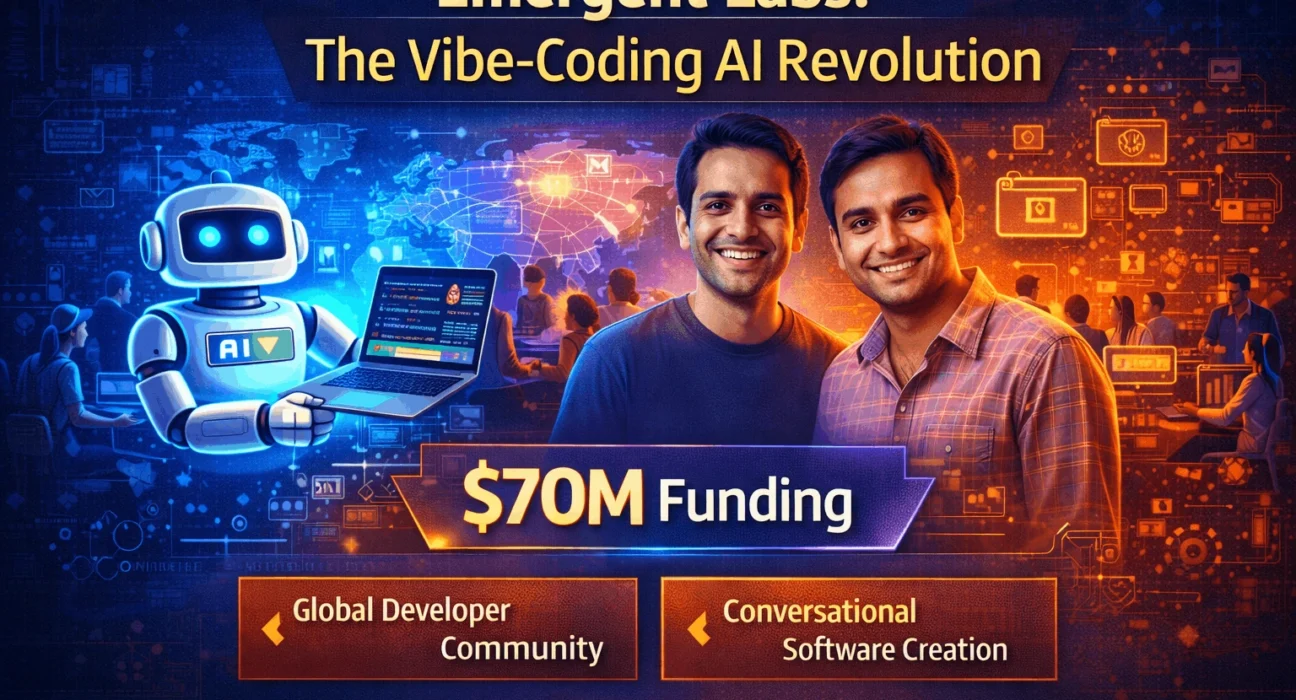
The rise of Emergent Labs honestly feels like one of those startup stories that sounds exaggerated… until you start digging into the numbers and user momentum. Founded by brothers Mukund Jha and Madhav Jha, the company didn’t just launch another AI tool. Instead, they introduced something they call “vibe-coding” — a culture-meets-technology approach that lets developers and creators build software through natural conversation, creative intent, and AI-assisted workflows.
And yeah, it sounds simple. But the ripple effect has been huge. Within a short span, Emergent Labs secured $70 million in funding, attracted a massive global developer community, and became a recognizable name in Silicon Valley AI circles. Their platform blurs the line between coding and creativity, helping both seasoned engineers and non-technical creators build applications faster and with less friction.
This founder story breaks down how the Jha brothers built trust in the AI ecosystem, leveraged community-driven growth, and positioned vibe-coding as a cultural movement rather than just a productivity tool. We’ll also explore how this funding round signals a shift in AI development trends, especially as no-code and conversational programming reshape software creation.
The Beginning: From Curiosity to Silicon Valley Spotlight
To be honest, every startup founder claims they “saw the future early.” But Mukund and Madhav Jha actually backed that claim with execution. Their journey didn’t begin with funding decks or Silicon Valley connections. It started with frustration — and that’s often where good ideas hide.
Mukund, who spent years working around AI product engineering, noticed developers constantly switching between tools, documentation, and testing environments. And Madhav, with his background in community-driven tech platforms, observed something interesting. People didn’t just want faster coding. They wanted coding to feel… natural. Almost conversational.
And that’s where the vibe-coding concept was born.
Instead of building rigid AI code generators, the brothers imagined a platform where developers could describe outcomes in everyday language and collaborate with AI like they would with a teammate. Sounds futuristic, right? But users quickly connected with the idea because it removed intimidation from programming.
What Exactly is Vibe-Coding?
Vibe-coding is an AI-powered development approach where users create software by describing intent, workflows, or creative ideas using natural conversation instead of traditional programming syntax.
It combines:
- Conversational AI programming
- No-code and low-code automation
- Real-time collaboration between humans and AI
- Creative workflow-based software development
Unlike standard AI code tools, vibe-coding focuses on user intuition, speed, and creative expression.
The Breakthrough Moment: Building Community Before Product
Here’s something many startups still get wrong. They build a product first and then try to find users. Emergent Labs flipped that entire logic.
In fact, Mukund and Madhav invested heavily in community engagement before the platform was even fully launched. They hosted open developer meetups, AI workshops, and online collaborative coding sessions. And honestly, that strategy worked like magic.
The platform didn’t feel like a tool. It felt like a movement.
Developers started sharing vibe-coded projects across GitHub-style communities and social platforms. Students began experimenting with app building without formal coding education. Even designers and product managers found themselves contributing to software development.
This organic community growth became one of the biggest reasons venture capital firms noticed Emergent Labs early.
The $70 Million Funding Round: Why Investors Paid Attention
When Emergent Labs announced its $70 million funding round, the AI startup ecosystem reacted instantly. And not just because of the funding size. Investors recognized three major growth signals.
1. Explosive Developer Adoption
The platform reportedly gained millions of global users experimenting with conversational software development. That kind of organic developer traction rarely happens without strong product-market fit.
2. AI Accessibility Market Boom
Industry reports from McKinsey AI Research suggest businesses are aggressively investing in AI tools that simplify workflows and reduce technical skill barriers.
3. Creator Economy Integration
Emergent Labs positioned vibe-coding not only for engineers but also for creators, entrepreneurs, and startup founders — a massive untapped market.
And investors? Well, they love platforms that expand user categories.
How Emergent Labs Built Global Trust in AI Development
Trust in AI platforms is tricky. Users worry about code accuracy, data privacy, and long-term platform stability. The Jha brothers tackled these concerns early.
They introduced transparent AI model training disclosures and community-driven code validation systems. Developers could openly review, modify, and verify generated outputs. This transparency helped Emergent Labs maintain credibility in a competitive AI startup environment.
And honestly, that trust factor played a big role in user retention. Because when developers rely on AI for production-level software, reliability isn’t optional.
The Technology Behind the Vibe-Coding Platform
Emergent Labs combines multiple AI development frameworks into one unified interface. The platform integrates:
- Natural Language Processing for intent recognition
- Real-time AI code generation engines
- Cloud-based collaboration infrastructure
- Machine learning feedback loops for improved code accuracy
According to research from Stanford Human-Centered AI Institute, conversational AI programming tools significantly reduce development cycles while increasing collaboration across technical and non-technical teams.
Emergent Labs essentially turned this research theory into a scalable product ecosystem.
Global Expansion Strategy: Not Just Silicon Valley
You might be wondering — how did Emergent Labs attract global users so quickly?
The company focused heavily on emerging developer markets including India, Southeast Asia, and Eastern Europe. These regions have large pools of aspiring software developers but limited access to advanced AI tools.
And honestly, that strategy feels smart. Instead of competing only in saturated Western developer ecosystems, they built adoption where curiosity and demand were already growing.
Lessons Startup Founders Can Learn From Mukund & Madhav Jha
The Emergent Labs story isn’t just about funding or AI innovation. It highlights strategic founder thinking that other startups can replicate.
Community Before Monetization
They prioritized user engagement over early revenue generation.
Simplifying Complex Technology
Vibe-coding made advanced AI accessible without technical intimidation.
Global Talent Inclusion
Their platform encouraged developers from non-traditional tech hubs to participate in AI innovation.
And honestly, that inclusivity strengthened the brand’s long-term scalability.
Challenges Ahead: Scaling AI Without Losing Creativity
But let’s be real. Rapid growth brings pressure.
Emergent Labs now faces the challenge of maintaining code accuracy, managing massive user data responsibly, and ensuring AI creativity doesn’t compromise software reliability. The global AI regulation landscape is also evolving quickly, especially with new compliance frameworks emerging in multiple regions.
Balancing innovation with accountability will define the company’s next growth phase.
Future of Vibe-Coding and AI Development Communities
Industry analysts predict vibe-coding could redefine how software teams operate. Instead of rigid development hierarchies, companies may adopt collaborative AI-assisted creative environments.
Platforms like Emergent Labs might eventually bridge the gap between software engineering, product design, and business strategy — all through conversational AI development.
And honestly, that possibility sounds less like speculation and more like a natural evolution of the creator economy.
Final Thoughts: Why Emergent Labs Represents a Cultural AI Shift
The story of Mukund and Madhav Jha isn’t just another startup success headline. It represents a shift in how humans interact with technology. Vibe-coding transforms software development into something closer to creative storytelling, where ideas flow naturally and AI helps translate imagination into functionality.
And maybe that’s the real reason Emergent Labs is gaining global attention. Not because they built an AI platform. But because they changed how people feel about building with AI.
FAQ
Who founded Emergent Labs?
Emergent Labs was founded by Mukund Jha and Madhav Jha, entrepreneurs focused on simplifying AI-powered software development.
What is vibe-coding in AI development?
Vibe-coding is an AI-assisted development method that allows users to create applications through natural conversation and workflow description rather than manual programming.
How much funding did Emergent Labs raise?
Emergent Labs secured approximately $70 million in funding to expand its global AI development platform.
Why is vibe-coding important for startups?
It reduces development complexity, accelerates product creation, and allows non-technical founders to participate in software innovation.
Summary

Article Name
How Emergent Labs Built a Global AI Community with Vibe-Coding
DescriptionEmergent Labs secures $70M funding with its breakthrough vibe-coding AI platform. Discover how Mukund & Madhav Jha built a global developer movement.
Author
Upstartzen Editorial Team
Publisher Name
Upstartzen