





Consumer Trust & Data Privacy in the Age of Automation (India Focused)
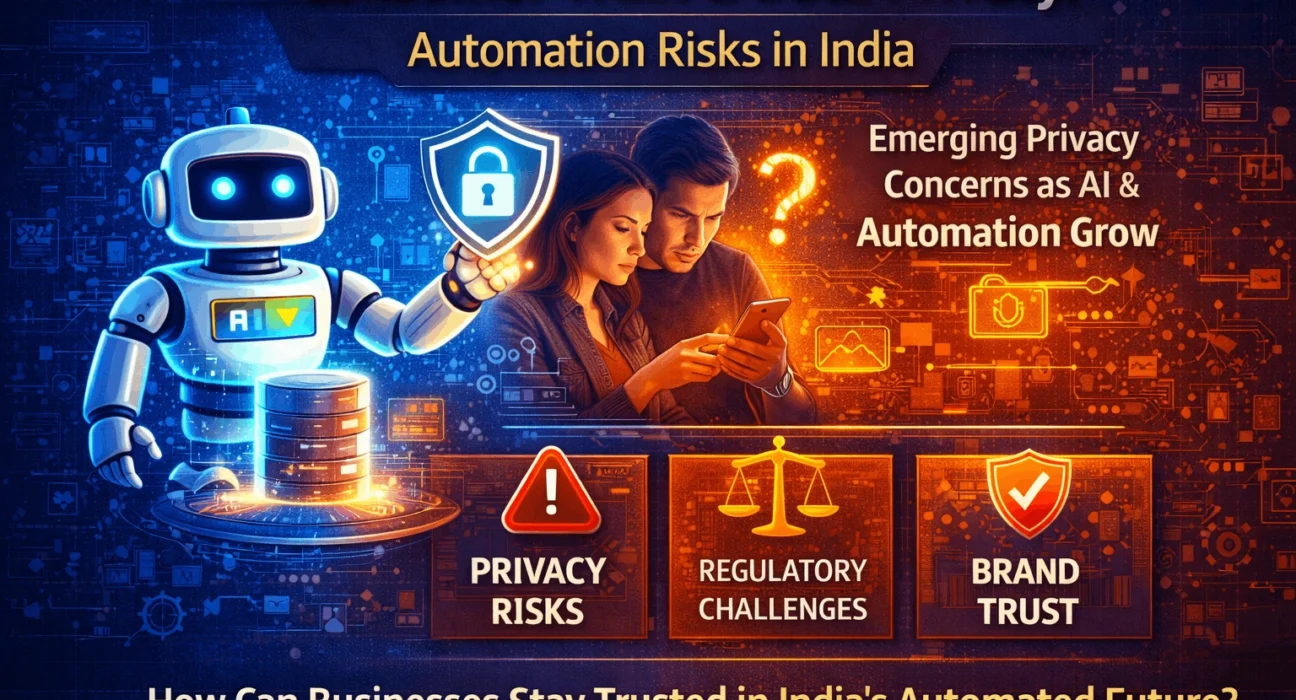
Synopsis
Automation has quietly taken over almost every corner of digital business. From AI chatbots handling customer queries to predictive algorithms deciding which ads users see, automation is no longer just supporting marketing — it is actively driving it.
But here’s the uncomfortable reality. While automation makes businesses faster, smarter, and more scalable, it also makes consumers more cautious… and sometimes skeptical.
India’s digital economy is expanding at an extraordinary pace. With over 850 million internet users and rapidly growing fintech, SaaS, EdTech, and e-commerce ecosystems, brands are collecting massive volumes of consumer data. Purchase patterns, browsing behavior, payment activities, and even emotional engagement signals are being tracked to deliver hyper-personalized experiences.
On the surface, this looks highly efficient. And in many ways, it is. However, beneath this efficiency lies a growing trust equation.
Consumers today want convenience. They appreciate personalized recommendations and seamless digital journeys. At the same time, they are increasingly concerned about how their data is collected, stored, shared, and protected. This tension is quietly shaping the future of digital marketing, automation adoption, and brand reputation across India’s startup and enterprise ecosystem.
This whitepaper examines the evolving relationship between automation-driven business growth and consumer data privacy expectations within the Indian market. It explores regulatory developments, compliance challenges, and the risk exposure businesses face while scaling automation initiatives. Additionally, it analyzes how startups, enterprise organizations, and marketing technology platforms are balancing innovation with responsible data governance.
Which raises an important strategic question — is data privacy simply a regulatory requirement, or is it emerging as a long-term competitive advantage?
The answer… increasingly, it is both.
Why is consumer trust important in automated marketing?
Consumer trust is essential in automated marketing because businesses depend heavily on personal data to deliver targeted and personalized customer experiences. When consumers feel confident that their data is being handled responsibly and securely, they are more likely to engage with brand communications, share information, and remain loyal customers.
However, if customers suspect their data is being misused, overshared, or poorly protected, it can quickly damage brand credibility. Loss of trust directly affects customer engagement, reduces retention rates, and can significantly impact long-term business growth and reputation.
India’s Automation Boom Is Running Faster Than Privacy Awareness
India has become one of the fastest-growing digital economies globally. Fintech apps, health platforms, EdTech learning ecosystems, and e-commerce marketplaces are using automation to scale operations and customer interactions.
And honestly, automation isn’t optional anymore. Businesses use AI-driven CRM systems, automated lead nurturing, recommendation engines, and behavioral analytics tools to compete.
But here’s the twist. Consumer awareness around privacy is growing almost as fast as automation adoption.
According to research from the Internet Freedom Foundation, Indian users are increasingly concerned about how companies collect and use personal data.
Internet Freedom Foundation Data Privacy Research
This shift means brands can’t treat data privacy as just backend compliance. It’s becoming a frontline brand experience factor.
The Rise of India’s Digital Personal Data Protection Act (DPDP)
India introduced the Digital Personal Data Protection Act to regulate how businesses collect, process, and store user data. And to be honest, it’s changing how startups approach automation infrastructure.
Digital Personal Data Protection Act Overview
The DPDP Act emphasizes:
• User consent-based data collection
• Purpose limitation for data usage
• Accountability for data breaches
• Strong penalties for non-compliance
And this is where automation systems face new challenges. Marketing platforms that rely on data aggregation now need transparent consent mechanisms and secure processing workflows.
Automation vs Privacy: The Balancing Act Brands Must Master
Automation thrives on data. The more behavioral signals brands collect, the smarter personalization becomes. But excessive data tracking can feel invasive to users.
It’s like walking a tightrope. On one side, there’s growth through personalization. On the other, there’s consumer trust erosion.
Brands that over-automate without transparency often face backlash. And startups, especially, are vulnerable because reputation damage spreads quickly in digital ecosystems.
How Consumer Behavior in India Is Changing
Indian users are becoming more selective about data sharing. Payment apps, OTT platforms, and e-commerce marketplaces have educated users about digital consent and privacy permissions.
And interestingly, younger audiences — especially Gen Z — expect transparency as a default brand behavior.
A global study by Cisco shows that consumers are more likely to engage with brands that clearly communicate privacy policies and data usage transparency.
So yes, privacy isn’t slowing marketing growth. It’s redefining customer loyalty metrics.
AIO Perspective: How Artificial Intelligence Impacts Data Privacy
Artificial Intelligence allows brands to analyze vast datasets and predict customer behavior with incredible accuracy. But AI systems also increase data risk exposure because they process sensitive personal information across multiple platforms.
Companies are now investing in ethical AI frameworks, anonymization technologies, and privacy-first analytics systems to reduce risk.
And honestly, AI governance is quickly becoming a competitive advantage rather than just compliance overhead.
GEO Perspective: India as a Global Privacy Compliance Hub
India’s digital market is increasingly influenced by global compliance standards like GDPR and cross-border data regulations. Startups operating internationally must align with multiple regulatory environments simultaneously.
This is pushing Indian SaaS and automation platforms toward stronger data governance infrastructure.
The Business Risk of Ignoring Consumer Trust
Let’s talk reality. Privacy failures don’t just trigger regulatory penalties. They create long-term brand damage.
Trust erosion leads to:
• Reduced customer retention
• Lower engagement rates
• Negative brand sentiment
• Investor confidence decline
And once trust breaks, rebuilding it is expensive. Sometimes impossible.
How Startups Can Build Privacy-First Automation Systems
Privacy-first growth strategies are becoming essential, not optional. Companies adopting transparent data frameworks often outperform competitors in customer retention.
Some proven approaches include:
• Consent-based personalization models
• Clear data usage communication
• Minimal data collection strategies
• Regular privacy audits
• AI ethics governance frameworks
And interestingly, brands that openly communicate privacy commitments often strengthen customer loyalty.
The Role of Martech & CRM Platforms in Privacy Compliance
Modern CRM systems are evolving to integrate consent tracking, encryption protocols, and compliance dashboards. Automation tools are shifting from aggressive tracking toward user-permission-driven data engagement.
And yes, this transformation is redefining digital marketing strategies across India’s startup landscape.
Future Outlook: Privacy Will Become a Core Brand Differentiator
Over the next decade, consumer trust will likely become one of the most valuable brand assets. Companies that prioritize ethical data practices and transparent automation workflows will gain competitive advantage.
Meanwhile, organizations that ignore privacy expectations may struggle with user adoption and brand credibility.
Final Thoughts
Automation is transforming marketing and customer experience at an incredible pace. But trust remains the foundation of sustainable growth.
Consumers aren’t rejecting automation. They’re demanding responsible automation.
And honestly, businesses that understand this balance will lead India’s digital economy evolution.
FAQ
How does automation impact data privacy?
Automation increases data collection and processing efficiency but also raises privacy risks. Businesses must implement consent frameworks, transparent data policies, and secure data infrastructure to maintain consumer trust and regulatory compliance.
Why is data privacy important for Indian startups?
Data privacy compliance helps Indian startups build customer confidence, protect brand reputation, and ensure adherence to regulatory requirements such as India’s Digital Personal Data Protection (DPDP) Act.
Summary

Article Name
Consumer Trust & Data Privacy in India: Automation, AI Risks & Regulatory Trends
DescriptionExplore how automation and AI are reshaping consumer trust and data privacy in India. Learn about regulations, user behavior shifts, brand risks, and strategies startups must follow to stay compliant and trusted.
Author
Upstartzen Editorial Team
Publisher Name
Upstartzen